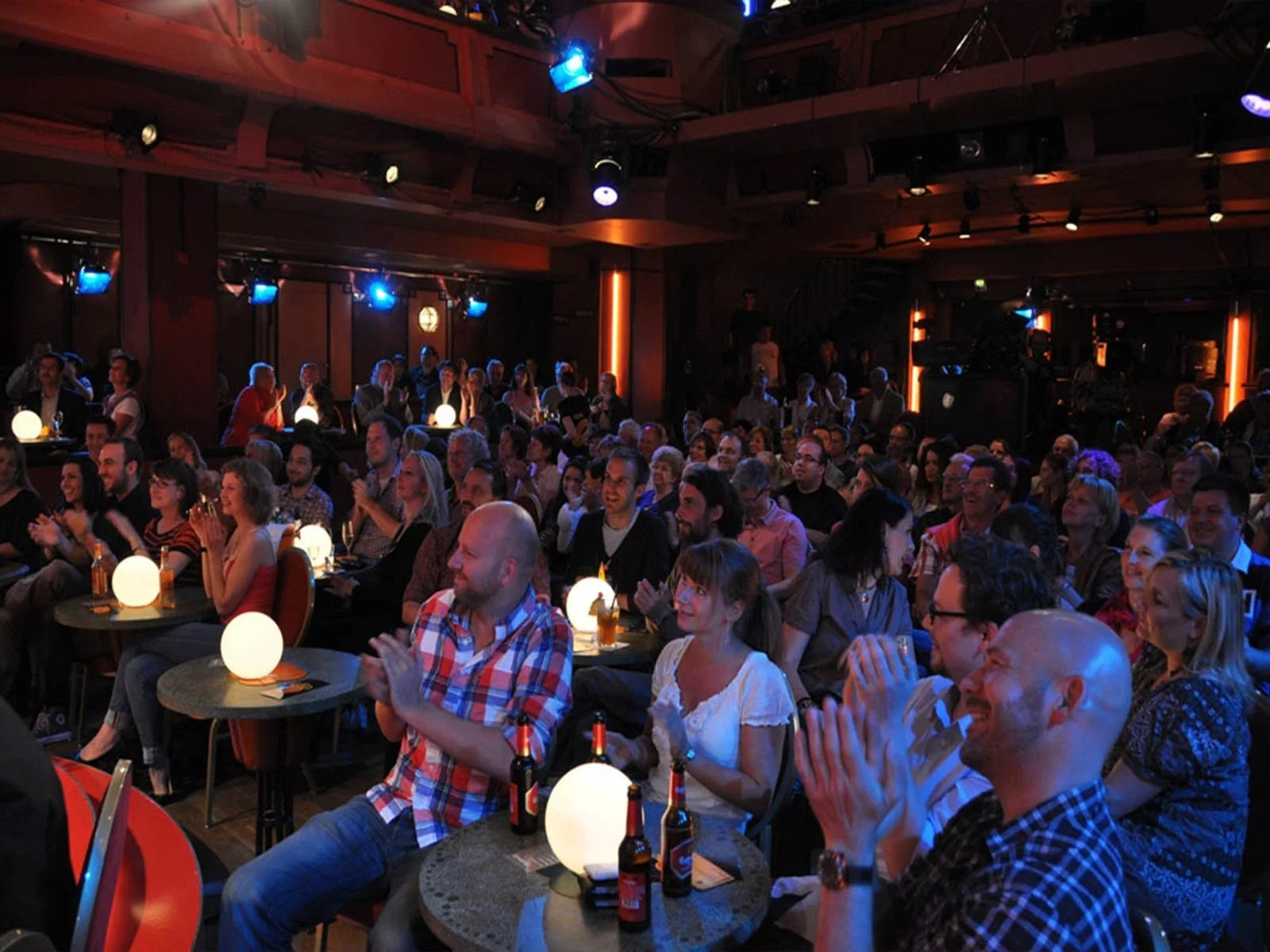
Why Comedy Shows Are an Underrated Night Out
Ask a group of adults what they want to do on Friday night and there is a decent chance the answer will be, “I don’t know. Drinks?”
Which is fine. I support drinks. I just think we’ve overlooked a pretty obvious upgrade: sitting down while someone who is supposed to be funny handles the entertainment.
I work with comedian Brad Kofman, so yes, I have a stake in this argument. I also think it’s a pretty easy argument to make.
Comedy shows deserve a much more regular spot in the group chat.
Someone else has already planned the entertainment
A comedy show solves one of the most exhausting parts of going out: figuring out what the actual plan is.
You pick a show, buy tickets, and have somewhere to be at a specific time. Get dinner beforehand if you want. Grab something afterward if the night is going well. Either way, the main event is handled.
Nobody has to spend forty-five minutes suggesting places to a group of people who are “down for anything” but somehow dislike every suggestion.
There’s also something appealing about being entertained while sitting in a chair. Some nights I want to dance. Other nights, a designated seat sounds like an excellent benefit.
You get to actually laugh out loud
Watching a funny clip on your phone can involve a lot of silent appreciation. Maybe you exhale through your nose. Maybe you send it to a friend with “I’m crying,” despite being completely dry-eyed.
At a live show, you hear the people around you lose it. Sometimes their laugh becomes part of what’s making you laugh.
There is research behind that social element. In a 2019 UCL-led study published in Current Biology, people rated recorded dad jokes as funnier when laughter was added. Spontaneous laughter had a bigger effect than posed laughter.
To me, that makes the room part of the appeal. The comedian brings the material, and everyone gets to enjoy the reaction together.
Also, researchers managed to improve dad jokes. I feel like we should give the rest of comedy a chance.
A clip gives you a sample of the show
Clips are great for discovering someone. But a full set gives the comedian time to build a story, take a detour, and bring something back later when you’ve almost forgotten about it.
You get to see how they handle the room, too. A reaction or an unexpected moment can become part of the performance. That is a good reason to show up even if you’ve already watched some of their videos.
And your phone can stay in your pocket for a while. The next video will still be there. It has shown a remarkable commitment to being there.
It gives you something to talk about afterward
Comedy is a good option for a date because it gives the evening a shared experience. You can get to know each other over dinner, then let someone else carry the conversation for a bit.
With friends, it gives you fresh material beyond the usual updates about work and whatever situation everyone has already analyzed to death.
You can disagree about the best joke. Bring up the one that caught you off guard. Discover that the friend with the very serious job has an absolutely ridiculous laugh.
That sounds like a pretty good use of a night out to me.
Make the first visit easy
You don’t have to wait until a comedian you already follow comes to town. Watch a clip or two from someone on a local lineup and see whether their humor appeals to you. Finding someone new is part of the fun.
Check the ticket price and any food or drink minimum before you book, along with the venue’s age requirement and arrival time. A little planning here saves confusion at the door.
For example, Zanies Chicago has a two-item minimum per person, which can include food or drinks. The beverages don’t have to be alcoholic.
If you’re looking for a Chicago comedy show to put on the calendar, Brad Kofman is headlining Zanies on Tuesday, October 20, 2026, at 7 p.m. Doors open at 6 p.m. The club is at 1548 N. Wells Street, and guests must be 21+ with photo ID.
Next time the group chat asks what everyone wants to do, send a show link.
You can still get drinks. This time, one of the funny people is scheduled to be there.
Get tickets for Brad’s October 20 Zanies show
Bagels, Bits & the Subway
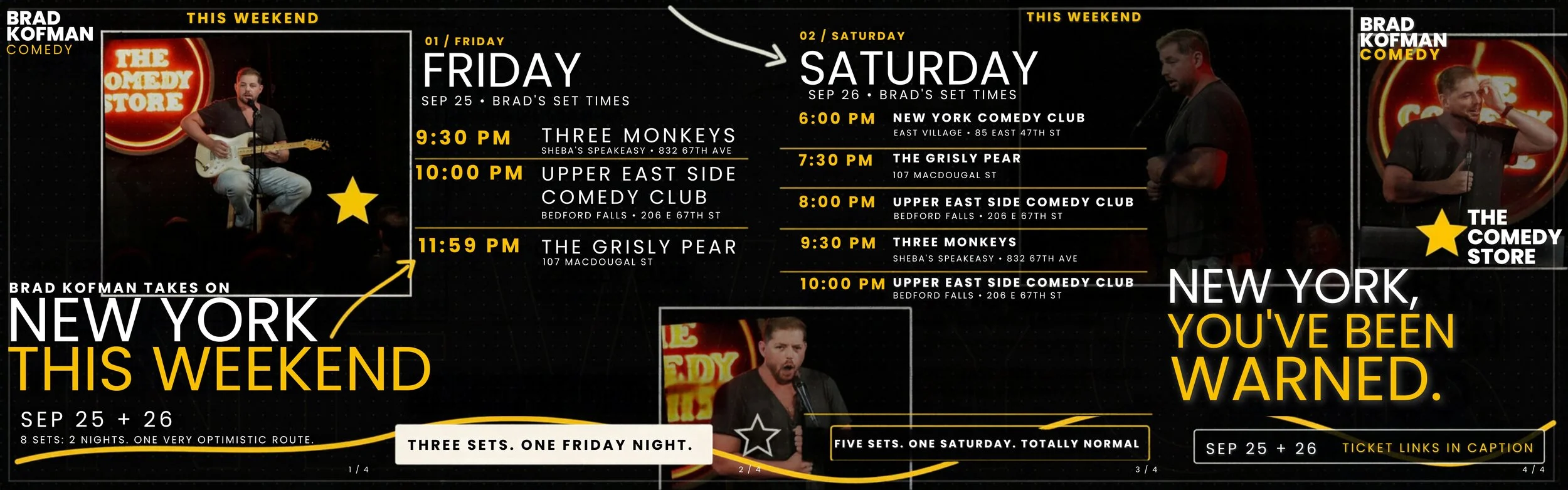
This weekend, I venture off again to one of my favorite cities: New York.
As much as I love Chicago and living here, there is nothing quite like the energy of New York City. The food, the people, the bars all have a vitality to them that cannot be matched anywhere else on earth. And don’t even get me started on the comedy.
There are few places where you can go and do five great shows in one night. I’ve packed my schedule full this weekend with shows, podcasts, collaborations with other entertainers, and I love it.
There is truly nothing better than grabbing a bagel in the morning, running to meetings all day, then heading straight into shows all night. The schedule gets so packed that sometimes your only option is to grab a slice and run to the subway just to make it to the next one on time.
That kind of chaos is part of what makes New York so great.
If you happen to be in New York this weekend, here are my show dates. Hope you can make it!
Top 3 Hot Dogs in Chicago, Fight Me.
There are foods you eat, and then there are foods that ask you to declare an allegiance. In Chicago, the hot dog is the second kind.
A Chicago dog comes with rules: mustard, onions, relish in a shade of green never approved by nature, tomato, pickle, sport peppers, celery salt, all balanced inside a poppy seed bun with the structural integrity of a folding chair. Ketchup is technically legal, but so is replying all. Freedom requires restraint.
Still, the hot dog itself is only half the story. The other half is the stand. The fluorescent lights. The paper wrapper turning translucent before you sit down. The fries you swear you will not finish and then quietly erase from history.
Chicago’s best hot dog stands do more than serve lunch. They preserve a small, edible version of the city: direct, overbuilt, slightly aggressive, and better than it has any reason to be.
These three still understand the assignment.
The Wiener’s Circle
After dark, The Wiener’s Circle feels less like a restaurant and more like a dare with a cash register.
You step inside, place your order, and wait to learn whether the person behind the counter has identified the exact insecurity you hoped to keep private. The insults are part of the mythology, and everyone knows it. You are not so much a customer as a willing participant in a highly efficient public humiliation system.
But the char dog is why the joke has lasted.
It arrives blistered in all the right places, smoky from the grill, and buried beneath the full Chicago garden. The casing snaps. The peppers hit. The bun begins losing its battle almost immediately. It is hot, messy, sharp, and completely worth being yelled at for.
Plenty of places can call you an idiot. Very few can make you grateful for the experience.
Byron’s Hot Dogs
Byron’s has a different kind of confidence. It does not need a show because the hot dog is already doing crowd work.
Calling it “dragged through the garden” feels insufficient. This thing has been chased through the produce aisle. Mustard, relish, onions, lettuce, tomato, green pepper, cucumber, pickle, and celery salt all show up at once, balanced on a bun that deserves hazard pay.
On paper, it sounds like someone lost control of a salad. In practice, it works. Every bite has crunch, acid, salt, heat, and just enough structural chaos to make you lean forward over the table. That lean is important. It is the posture of a person who knows lunch can no longer be trusted.
Byron’s does not try to make a hot dog elegant. It makes one abundant. There is something deeply Chicago about looking at a perfectly reasonable amount of toppings and deciding the answer is more vegetables.
Wolfy’s
Then there is Wolfy’s, sitting on Peterson beneath that giant fork-and-sausage sign, looking like a place somebody drew from memory after dreaming about Chicago.
Wolfy’s has been part of the Far North Side since 1967, and it carries that history lightly. Nothing feels frozen in time. It feels maintained. There is a difference.
The jumbo char dog comes fully loaded, with a beefy snap underneath the mustard, relish, onions, tomato, pickle, sport peppers, and celery salt. The pickle is loud. The relish is bright. The peppers are waiting to turn one careless bite into a private medical event.
And the fries matter. They are crisp, hot, honest, and usually gone before you remember agreeing to share them.
Wolfy’s is not trying to reinvent the Chicago hot dog. It is doing something harder. It is keeping the original promise. Try making the same simple thing well for nearly sixty years and see how simple it feels.
That is what these three places understand. A Chicago hot dog may be inexpensive food, but it is not disposable food. It carries rules, memory, neighborhood loyalty, mild aggression, and enough vegetables to let you lie to yourself about making a healthy choice.
The city will keep changing. Restaurants will become concepts. Menus will acquire QR codes, truffle aioli, and a four-paragraph origin story. But somewhere under fluorescent lights, a hot dog will still arrive wrapped in paper, overloaded with vegetables, and completely uninterested in your opinion.
No reinvention. No apology. No ketchup.
Just lunch, still meaning something.
Five Reasons You Should Buy Your Ticket To My Zanies Show Right Now, You Beautiful Doomed Animal
You haven’t bought your Zanies ticket yet, and apparently that’s become a much bigger problem than anyone expected. Between an impending sellout, questionable Swedish citizenship, a potentially very cool special guest, and the honor of being Chicago’s Slim Thickest Comedian, there are now several extremely compelling reasons to fix that immediately.
Chicago, somewhere north of Wells Street, the air thick as gravy, the lake doing that thing where it looks like it’s plotting.
We were somewhere around the corner of Wells and North when the panic began to take hold. I remember saying something like “I feel a bit lightheaded, maybe you should sell the tickets…” and then suddenly there was a terrible roar all around us and the sky was full of what looked like enormous laughing bats, all of them holding confirmation emails I did not send. It was clear to me then, as it is clear to me now, in whatever passes for clarity at this hour: you have not bought your ticket yet. And this is a problem. Not for me, I will be there regardless, because I am contractually and spiritually obligated, but for you, personally, in ways I will now enumerate with the cold precision of a man who has read exactly one page of a legal document and understood none of it.
1. It Will Sell Out
Understand something about a sellout: it is not a prediction, it is a weather system. It forms out over the lake, it gathers, and then one Tuesday afternoon a switch flips and the little seat map goes red and there is nothing anyone can do. Not me. Not the box office. Not your friend who “knows a guy.” The room holds what it holds, and when it is full it is full, and you will be standing outside on Wells with your face pressed to the glass like a Victorian orphan who has heard rumors of soup.
2. I’m Extremely Handsome
I say this not as a boast but as a public safety notice, the way a city posts a sign near a cliff. Photographs do not capture it. Photographs flatten it, the way a map flattens a mountain range into a few polite squiggles. In person, under the lights, at close range, it becomes an entirely different animal, and people who were not warned have been known to make poor decisions afterward, texting exes, buying jackets, taking up sailing. Come and see it. Bring water. Do not stare directly at it for the first four minutes.
3. There May Or May Not Be A Very Cool Special Guest
Note the construction: may or may not. This is the most honest sentence in show business. Somewhere out there is a very cool special guest, and somewhere out there is a version of the evening in which they do not appear, and both of these worlds are currently alive and humming and refusing to collapse into one. The only known method of collapsing them is to be present in the room. This is science. I did not make the rules of the universe, I am merely the guy who noticed them and sold tickets accordingly.
4. I May Be Swedish Now
I want to be careful here, because I am not a lawyer and the paperwork is ongoing and possibly imaginary. But there have been developments. There has been a certain feeling. A pull. A distant fjord-shaped ache somewhere behind the ribs, an unearned confidence around herring, a new and troubling instinct to remove my shoes in other people’s homes. I cannot prove any of it and I will not be taking questions about the specifics beforehand. Come to the show and observe the evidence with your own eyes. Bring a jury if you like.
5. As A Swede, You Have To Go, Otherwise The Most Historically Neutral Country In The World Will Be Mad At You
Consider the stakes. This is a nation that sat out the big one. Two of them, arguably. A country that has spent centuries perfecting the art of not getting involved, of standing calmly at the edge of every catastrophe with its hands in its pockets. And you, you, are going to be the thing that finally breaks that streak. The one provocation too far. Somewhere in Stockholm a very tall man in a nice sweater is looking at the seating chart and quietly noting your absence, and when neutrality finally ends, history will not blame the tanks or the treaties. It will blame you, and a Tuesday in Chicago, and a comedy club on Wells Street.
Honorable Mention: I Was Voted Chicago’s Slim Thickest Comedian
I did not seek this title. The title sought me. There was no campaign, no lawn signs, no shaking of hands outside an Aldi. The people simply spoke, as the people do, and what the people said was: slim thickest. You may live your entire life in this city and never see the honor conferred again. The scientists cannot replicate it. Come see it in person while the phenomenon still stands upright and tells jokes.
⸻
Zanies Chicago. CLICK HERE to grab your tickets before the seat map goes red.
Buy them now, while the bats are still friendly.

A Moment for Nepal
The flooding in Nepal this past week has been absolutely devastating. On August 26, catastrophic flash floods tore through northern Nepal, destroying homes, roads and entire communities, and leaving thousands of families facing unimaginable loss. More than 1,000 people have been reported dead as rescue and recovery efforts continue. If you’re able to help, the Nepal Red Cross is providing emergency shelter, clean water, food, medical care and other critical relief to those affected.

The flooding in Nepal this past week has been absolutely devastating. On August 26, catastrophic flash floods tore through northern Nepal, destroying homes, roads and entire communities, and leaving thousands of families facing unimaginable loss. More than 1,000 people have been reported dead as rescue and recovery efforts continue. If you’re able to help, the Nepal Red Cross is providing emergency shelter, clean water, food, medical care and other critical relief to those affected.

The Unspoken Rules
Nobody sat you down and taught you these, but somehow everyone knows the unspoken rules.
Don’t double dip. Don’t get involved in an argument between a husband and wife. And if a no-hitter is going on, you do not speak of the no-hitter.
Nobody wrote these rules down, but break one and the whole room feels it.
The social contract is weird. But somehow, we all agreed to it.
Nobody sat you down and taught you these. There was no orientation, no pamphlet, no substitute teacher rolling in a TV cart to show you a grainy video about it. And yet every single person in the room knows them, follows them, and will judge you into dust the moment you break one.
These are the unspoken rules. The invisible constitution of being a person around other people. You can't cite them. You can't look them up. But the second somebody violates one, the whole room feels it in their spine.
Let's start with the big one, the granddaddy, the rule that has ended friendships and possibly a marriage or two: don't double dip.
You get one trip. One.
You take your chip, you load it up with whatever the host put in that bowl, you eat it, and then you get a new chip like a civilized adult. What you do not do is take a bite, look thoughtfully into the middle distance, and then send that same chip back down into the community trough.
That's not a snack anymore. That's a saliva delivery system.
And here's the thing. Nobody says anything. Nobody ever says anything. They just quietly stop eating the dip, and you spend the rest of the party wondering why you're the only one enjoying the queso.
You're not the only one who wanted it. You're the reason nobody else can have it.
Next: never, under any circumstances, get involved in an argument between a husband and wife.
You will think you're helping. You are not helping.
You are a man walking into a hurricane holding an umbrella, saying, "Well, actually, I think you both have good points."
Here is what happens next. They stop arguing with each other. They turn, in perfect synchronized horror-movie unison, and they argue with you.
Because the one thing a married couple can always agree on is that whoever just butted in is the actual problem.
That fight was going to last eleven minutes and end with a shared dessert. You just made it a three-day silent treatment with your name in it.
Sit down. Look at your phone. Become furniture. That is your role.
And then there's the holiest one of them all: if a no-hitter is going on, you do not speak of the no-hitter.
It doesn't matter that everyone in the ballpark can see the zeroes on the scoreboard. It doesn't matter that the broadcast is putting a giant graphic on the screen every half inning like it's no big deal. You don't say the words. You don't even say the shape of the words.
You don't lean over to the guy next to you in the seventh and go, "Hey, do you realize..."
No. Shut up.
Somebody's uncle has been sitting in the same position with the same beer for two hours and he will not move, because he knows he was sitting like this when the fifth inning ended and he is not going to be the guy who jinxed it.
That's not superstition. That's service.
That's a man taking on a burden so that a stranger on a mound in Chicago can have the night of his life.
What's beautiful about all of these, if you sit with it for a second, is that they're all the same rule wearing different outfits.
Every one of them is basically this: the thing you want to do right now would be worse for everybody than simply staying still.
You want the dip. You want to be the peacemaker. You want to say the exciting thing out loud. And the unspoken rule says, cool, want it quietly.
The whole social contract is basically a bunch of people agreeing not to do the slightly selfish thing at the exact moment it would be easiest to do it.
There are a hundred more of these, and you know every one.
You don't take the last slice without offering it first.
You don't sit directly next to someone in an empty theater.
You don't hold the elevator door and then make eye contact for eleven floors.
You don't reply all.
You don't tell somebody how the movie ends, even if they're being annoying about not having seen it.
You don't start getting your things together to leave someone's house and then somehow stay another hour and a half. Once the goodbye has started, we're all committed.
Nobody wrote these rules down, and I don't think anybody should.
Because the second you make it official, somebody's going to start arguing about the exceptions.
And I promise you, that guy is double dipping.
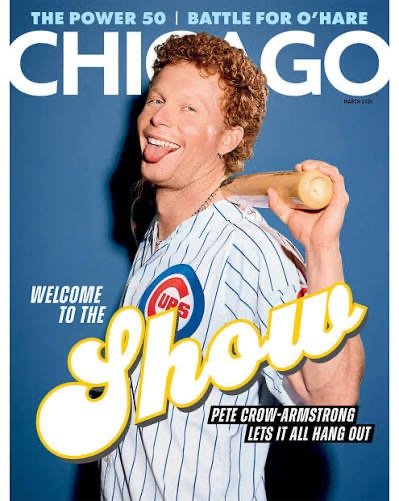
Pete Crow-Armstrong’s Playing Baseball on a Whole New Level, and Wrigley Knows It!
Foreword
As you may know, I’ve grown up and lived in Chicago my entire life, and have been a lifelong Cubs fan. I wrote this for the other Cubs fans out there who know exactly what I’m talking about when I say: we’re trained to never get excited.
⚾ ⚾ ⚾
I have watched this team lose in every way a baseball team can lose.
I've watched them lose 6-5 in the 14th. I've watched them lose because a guy stopped running. I've watched a bullpen turn a three-run lead into a two-hour hostage situation.
So understand what I mean when I say that what happened at Wrigley on Monday night was not a nice moment.
It was a statement.
And it was delivered by a 24-year-old center fielder who is currently the best player in the National League.
Bottom of the 10th. Tie game, 5-5.
Hagen Smith on the mound for the White Sox. Pete Crow-Armstrong leads off, gets a 2-1 slider, and drives it into the right-field patio.
Thirtieth home run of the year.
Second homer of the night.
First walk-off of his career.
And with 31 steals already banked, he becomes the first player in Cubs history with back-to-back 30-30 seasons.
He took his top hand off the bat and pointed at the sky before he'd taken three steps.
He knew.
⚾ The Full Ledger on Monday Night
Let's do the whole game, because the whole game matters.
1st Inning — 💥
Crow-Armstrong led off the first inning by turning around Luis Castillo's first pitch down the right-field line and out. That's his fifth leadoff homer of the season.
Four pitches later Seiya Suzuki went back-to-back to deep left-center.
Two-nothing before the Sox recorded an out.
4th Inning — 😬
Randal Grichuk gets Shota Imanaga for a three-run shot and the Sox lead 3-2.
That's the 29th home run Imanaga has surrendered this season, which is the number that will decide whether he's a playoff starter or a matchup guy in October.
Otherwise Imanaga was excellent — six innings, ten strikeouts, only his sixth double-digit-K game in 79 career starts.
One pitch.
That's the whole outing in one pitch.
5th Inning — 🤷
Cubs get two back on a tapped grounder and a throwing error.
Not pretty. Counts the same.
7th Inning — 🫠
The inning that would have haunted a lesser team.
Bregman singles for his third hit, Happ sacrifices him over — only the sixth sac bunt the Cubs have laid down all year, tied for the fewest in baseball — Hoerner singles but not deep enough to score him.
Then Bregman gets picked off third by Jake Rogers on a Hoerner steal attempt.
In August. In a one-run game. Against the White Sox.
8th Inning — 😑
Ryan Zeferjahn, the deadline addition, throws one pitch to pinch-hitter Andrew Benintendi, and Benintendi puts it in the right-field basket.
Two-run shot. Sox lead 5-4.
9th Inning — 👀
Nico Hoerner, who finished 4-for-5, singles home the tying run.
Top of the 10th — 🫣
Jacob Webb loads the bases and gets out of it.
Zero runs.
Bottom of the 10th — 🚀
See above.
📊 Final Line
Cubs: 14 hits, zero errors.
Sox: four hits, two errors.
Chicago went 4-for-16 with runners in scoring position, which is exactly the kind of night that used to end 5-4 the other way.
It's the Cubs' twelfth walk-off win of the season, which leads Major League Baseball.
That's not luck. Twelve times is a trait.
📍 Where the Season Actually Stands
73-53.
Four and a half back of Milwaukee, who at 77-48 refuse to be normal about anything.
Fourth-best record in the National League, which right now means the top wild card slot and a road series in October unless something changes in the next six weeks.
Here's the thing nobody wants to say out loud on the North Side:
The Cubs got run over by the Cardinals at home over the weekend.
8-4 on Saturday.
11-4 on Sunday.
Then on Sunday they lost Dansby Swanson to an oblique and Edward Cabrera to a finger blister, both to the IL.
You lose your shortstop and a starter in the same afternoon and then the crosstown series shows up on Monday.
That's the schedule not caring about your feelings.
So they won it anyway.
With a patched-together infield.
With Imanaga giving up a three-run homer.
With their third baseman getting picked off third base.
Bregman has been worth the money since the calendar flipped to August. Hoerner is doing what Hoerner does. Suzuki is running hot.
And Crow-Armstrong is in an actual MVP race with Shohei Ohtani, who also hit two home runs Monday night, because of course he did.
PCA entered the night hitting .276 with a .906 OPS, and he plays the best center field in baseball.
That last part is not a tiebreaker to me.
It's the argument.
🚇 About the Team in the Other Dugout
I'm not going to be cute about this.
The White Sox are 65-59 and in first place in the American League Central, five and a half up on Detroit, and they came into Wrigley off a sweep in Detroit having won six of eight.
This is a franchise that lost 121 games in 2024 and 102 in 2025.
They opened this season 6-13.
Will Venable has them playing nine innings hard every single night, Munetaka Murakami has been a legitimate middle-of-the-order bat in his first MLB season, and Colson Montgomery and Miguel Vargas have both been real.
They also took two of three from the Cubs on the South Side earlier this year.
So spare me.
For the first time in about a decade, this series has stakes on both ends of the Red Line.
Two more at Wrigley:
⚾ Tuesday at 7:05
⚾ Wednesday at 1:20
Both teams are playing for playoff seeding in the middle of August.
That hasn't happened here since 2008, and if you were around for 2008 you know why I'm not going to finish that sentence.
💙 The Part Where I Admit Something
I've been a Cubs fan my entire life, which means I have a nervous system permanently calibrated for disaster.
Monday night, when Benintendi's ball landed in the basket in the eighth, I did the math on the standings before the ball stopped rolling.
That's not pessimism. That's training.
And then Hoerner ties it.
And Webb escapes the tenth.
And Pete leads off the bottom half and puts it in the patio.
And for eight seconds, Wrigley sounds like the inside of a jet engine.
That's the whole thing.
That's why we do this.
Not because it always works out — I have decades of evidence that it does not — but because on a Monday night in August a kid who wasn't alive for the 2003 season can hit a baseball into the seats and make 40,000 people forget what they were worried about.
⚾
Two more games.
Beat the Sox.
The Most Terrifying $100 I Ever Made
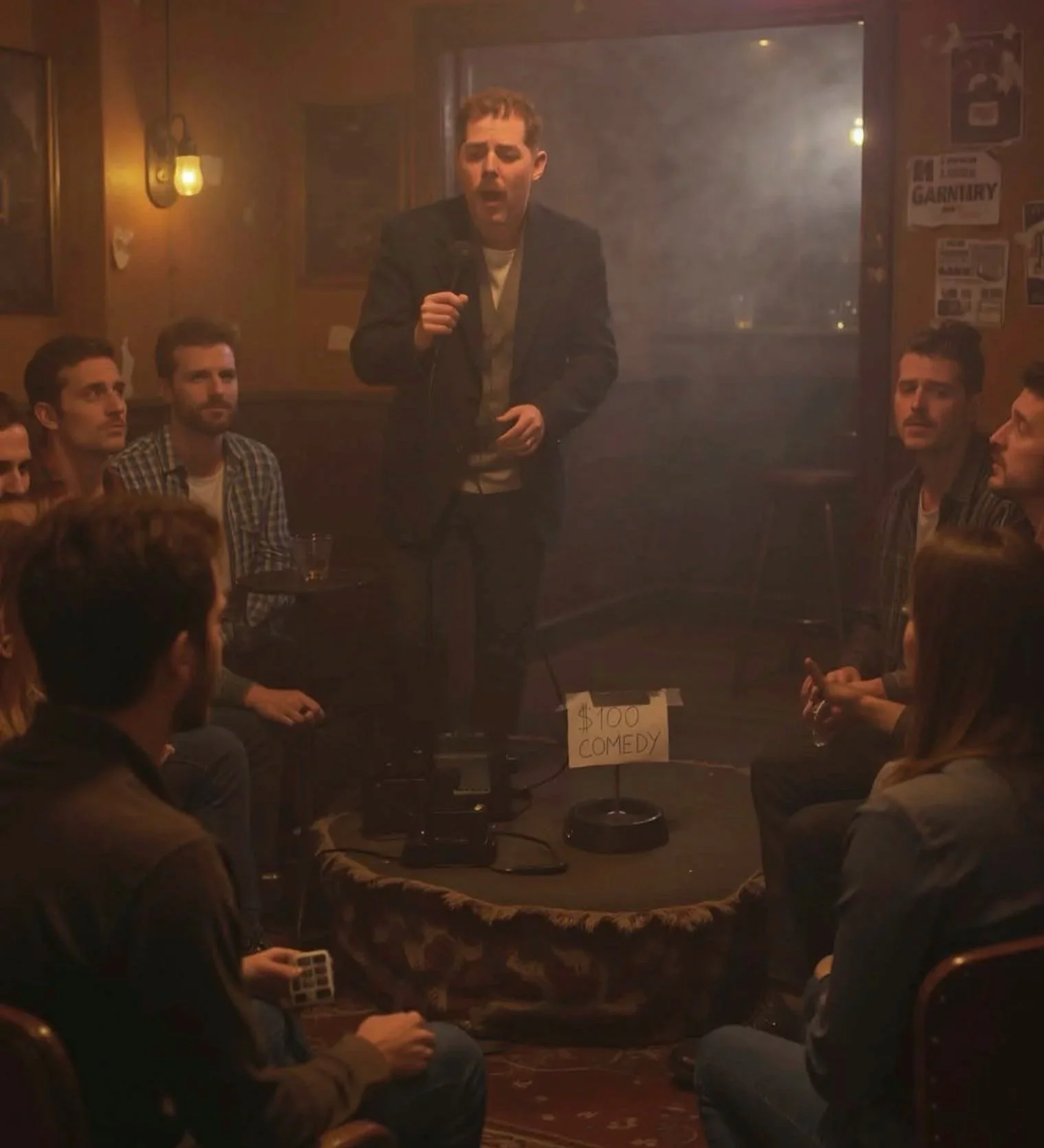
yep that’s me and you’re probably wondering how I got in the situation….
well ya see it’s sorta a long story…
long story short below:
About two years into doing stand-up, I got offered $100 to perform at a nightclub in Gary, Indiana.
At the time, $100 for comedy might as well have been a Netflix deal.
They found me on Facebook, which should have been my first warning.
I reached out to get some details. They told me there would be around 30 people at a nightclub they had rented out. Sounded normal enough.
Then I asked what the occasion was.
One of the guys said, “One of my best friends is getting back from prison.”
Okay.
Then came the question:
“You’re still coming, right?”
“Yeah. Yeah, absolutely.”
I hung up and immediately thought: Am I?
I spent the next four hours debating whether $100 was enough money to potentially die in Gary, Indiana.
Apparently, it was.
I drove there and sat in the parking lot for an embarrassingly long time. The “nightclub” was tucked into a sketchy strip mall, with an empty bar in the front and the actual party hidden somewhere in the back.
Eventually, I forced myself inside.
There weren't 30 people.
There were about 11 guys, three women, and me.
They'd rented out this tiny club, but it felt less like a comedy show and more like somebody's living room where everyone had collectively agreed to stare at me.
And I had to do 30 minutes.
Remember: I was two years into comedy. I didn't have the experience to handle a room like that.
I also didn't have 30 minutes of good jokes.
So, naturally, the welcome-home-from-prison party spent most of my set roasting me.
I finished, took my $100, and got the hell out of there.
To this day, I couldn't tell you whether I was hired as the entertainment or the sacrifice.
But I got paid.
And technically, nobody went back to prison.
So I’d call it a successful show.
Thankfully, the gigs have improved since then.
I’ve got some upcoming shows where, as far as I know, none are prison-release parties in Gary, Indiana.
Come see me live. I promise the room will be slightly less terrifying.
Upcoming Shows → [bradkofman.com/shows]
— Brad
We Need to Bring Back Being a “Regular”
HOT TAKE: NOT EVERYTHING OR EVERYWHERE NEEDS ENDLESS OPTIONS MAKES IT HARDER FOR THE REST OF US.
Decision Fatigue but it’s forever, never ending, and gets more complicated by the day.
I think we've accidentally made life too complicated.
Every coffee shop has 47 drink options.
Every TV show has eight seasons.
Every app wants you to "unlock premium."
Meanwhile, we've forgotten one of life's greatest joys...
Being a regular somewhere.
You know the people I'm talking about.
The guy who walks into the coffee shop and they start making his order before he says a word.
The woman whose bartender sees her walk in and says, "The usual?"
That's confidence.
Me? I'm a regular at exactly one place, and it's my local grocery store because I keep forgetting ingredients.
I'll confidently buy everything for tacos, get home, and realize I forgot tortillas.
The next day I'm back.
Then I forgot cheese.
Then sour cream.
At this point, the cashier thinks I'm cooking one taco every 24 hours.
There's something comforting about places where you know what you're getting.
You walk in, settle into your seat, and for the next hour or two you don't have to think about work, emails, bills, or whether you remembered to switch the laundry.
You just laugh.
Honestly, I think we could all use a little more of that.
I've got a bunch of shows coming up, and I'd love to see some familiar faces in the crowd. Maybe you'll become one of the regulars. Maybe you'll bring someone who's never seen live comedy before.
Either way, I promise it'll be a lot more fun than making your fourth trip to the grocery store because you forgot cilantro.
Check out my upcoming shows, grab a couple of tickets, and come hang out.
Who knows?
Maybe we'll make being “regular” cool again.
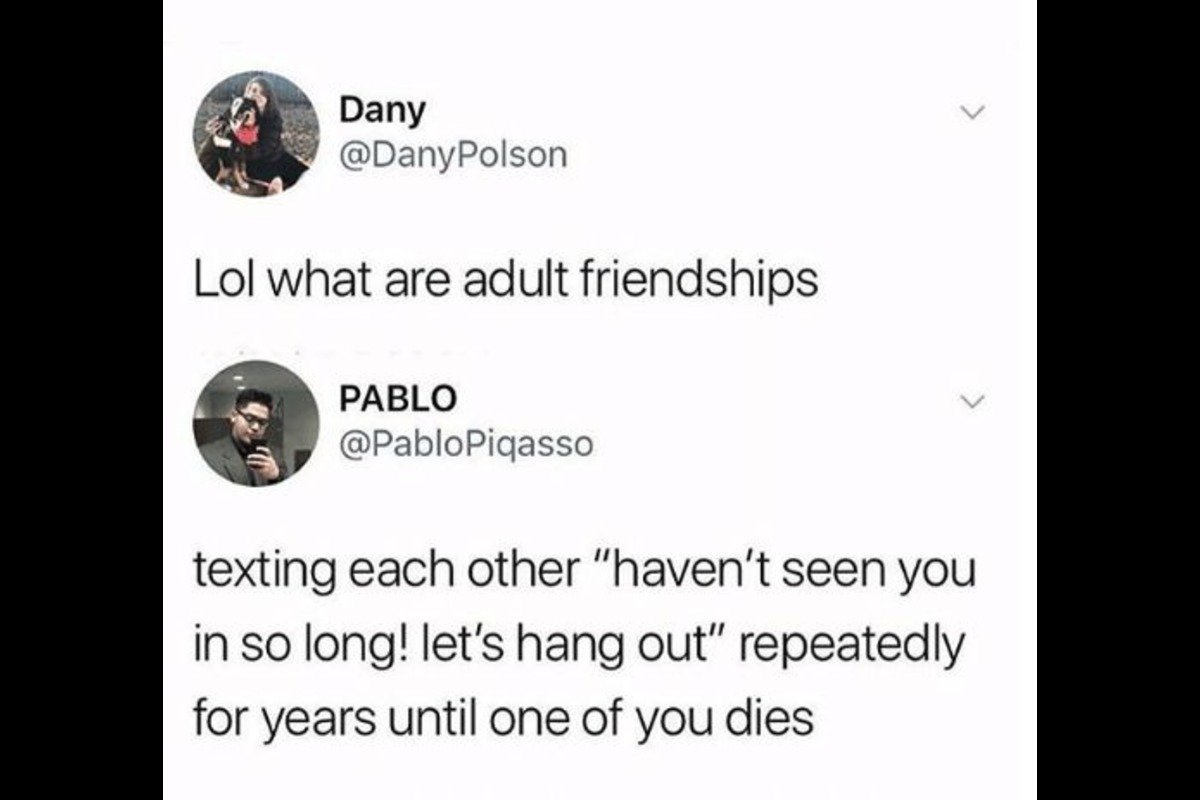
The Biggest Lie Adults Tell Each Other.
There are a handful of lies people tell themselves.
“I’m just going to watch one episode.”
“I’ll answer that email tomorrow morning.”
And my personal favorite…
“We should do this more often.”
You know exactly when it happens.
You go out with your friends, you laugh harder than you have in weeks, everyone has a great time, and as you’re walking back to the car someone says, “Seriously… we need to do this more.”
Then nobody plans anything for the next four months.
Life gets busy. Work piles up. Someone gets engaged. Someone has a baby. Somehow another friend starts training for a marathon even though last year they thought walking through an airport was cardio.
Before you know it, your group chat has turned into nothing but Instagram Reels and “Happy Birthday!!” messages.
Here’s my completely unbiased opinion…
Live comedy is one of the easiest ways to break that cycle.
You don’t have to plan a whole weekend. You don’t need matching outfits or a group vacation sp readsheet. Just pick a date, grab a couple of friends, and show up.
For two hours, nobody’s talking about work. Nobody’s checking Slack. Nobody’s pretending they enjoy networking. You’re just laughing together, and somehow that’s enough.
I’ve got some really fun shows coming up over the next couple of months, and I’d love to see you at one of them.
And yes… I’m going to keep reminding you about October 20 at Zanies Chicago, because it’s a show I’ve been looking forward to for a long time. If you’ve been waiting for the right night to come out, this is it.
So text that friend you’ve been saying, “We should hang out soon.”
This is “soon.”
I’ll see you at a show.
Click the sentence above to see a list of my upcoming shows!
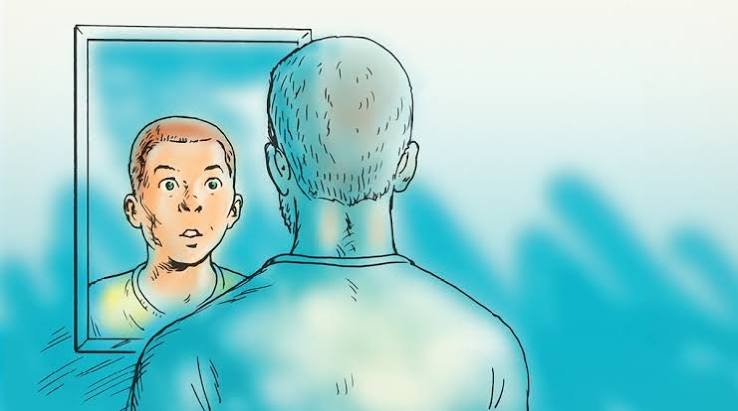
Why Adults Secretly Miss Being Told What to Do?
There are exactly two times in life when someone tells you where to be, what to wear, and when to eat.
Kindergarten.
And prison.
Everything in between is just chaos.
As adults, we’re constantly making decisions. Which streaming service do I cancel? Which streaming service am I about to accidentally subscribe to again? Should I cook dinner or spend $42 on DoorDash because I “deserve it” after answering three emails?
Nobody prepares you for the mental exhaustion of making 6,000 tiny decisions every day.
By the time you’re 30, walking into Costco without a list feels like you’re competing on a survival show.
“Your challenge is to leave with only toothpaste.”
Forty-five minutes later you’re loading a kayak into your sedan.
It’s why people love guided tours.
Not because they’re educational.
Because someone else says, “We’re going this way.”
Thank God.
Even restaurants have figured this out.
Chef’s tasting menu?
Translation: “Please stop pretending you know what wine pairs with duck.”
And honestly… relief.
This is also why weddings are weirdly enjoyable.
Sure, you’re there to celebrate love.
But you’re also thrilled that someone handed you an itinerary.
4:30 Ceremony.
6:00 Cocktails.
7:00 Dinner.
9:00 Someone’s uncle thinks he’s still got it on the dance floor.
No decisions. Just vibes.
Meanwhile, every group text trying to make dinner plans looks like a United Nations peace summit.
“What do you guys want?”
“I’m down for anything.”
“I’m good with whatever.”
“Actually not sushi.”
“Or burgers.”
“Or Italian.”
“Wait… does anyone know a place with parking?”
Three hours later everyone’s eating cereal at home.
Kids have no appreciation for how good they have it.
A teacher literally says, “Today we’re making macaroni art.”
You don’t have to brainstorm. You don’t have to schedule it. You don’t have to compare reviews.
Just glue noodles to paper and call it a masterpiece.
Adults would pay for that experience.
Actually… they do.
It’s called a paint-and-sip.
Somewhere along the way we convinced ourselves that freedom meant unlimited choices.
Turns out unlimited choices are exhausting.
Sometimes the greatest luxury isn’t a vacation.
It’s someone saying…
“Be here at 7.”
“Sit there.”
“We’ve got the rest.”
Which brings me to something I’ve been thinking about lately.
There’s one place in Chicago where all you have to do is show up, grab a drink, laugh, and let someone else take over for the night.
Funny how that sounds more relaxing than a spa.
If you’re looking for one less decision to make this fall, I’ve got an easy one for you.
Come see me headline Zanies Chicago on October 20.
I’ll handle the jokes.
You just have to decide which friends you’re bringing.
Get your tickets here:
Brad Kofman's Zanies Chicago Headlining Show – October 20.
The show is also listed on our home page, upcoming shows page & the official Zanies calendar.

Top 5 Scientifically Unproven Ways to Survive This Heat Wave

There's a heat dome parked over half the country right now like it pays rent here, and the weatherman keeps saying "feels like 108" in the tone of someone who's enjoying this. We don't have a meteorology degree, but we do have a fan, a six-pack of something light, and zero plans before 9pm. Here's the survival guide nobody asked for.
#1. Drink More Light Beers
Hydration is important, and a light beer is basically water with a slightly better personality. Is this medically endorsed? No. Is it 4.2% ABV and mostly carbonation? Also yes. Science is whatever you decide it is at 95 degrees.
#2. Only Go Outside After Dark
The sun is undefeated right now and frankly showing off. The move is to live like a raccoon for the next week — nocturnal, mildly suspicious, only spotted near the trash cans after 10pm looking for food.
#3. Nap Aggressively
A nap is just a polite way to skip the worst part of the day without anyone calling it "hiding." Lie down, turn off your brain, wake up and the sun has hopefully reconsidered its life choices.
#4. Take Cold Showers Like You Owe Someone Money
Multiple cold showers a day isn't excessive, it's a lifestyle. You'll walk in looking like a man defeated by summer and walk out looking like you just remembered you're built different.
#5. Buy a Fan (Or Three)
Doesn't matter if it's a $20 box fan from the hardware store or something with a remote and four speeds you'll never use past "medium." Buy it, point it at your face, and become best friends with it for the next 96 hours.
---
Bottom line: stay inside, stay horizontal, stay slightly buzzed on something light, and let the sun do its thing without you. See you at golden hour.
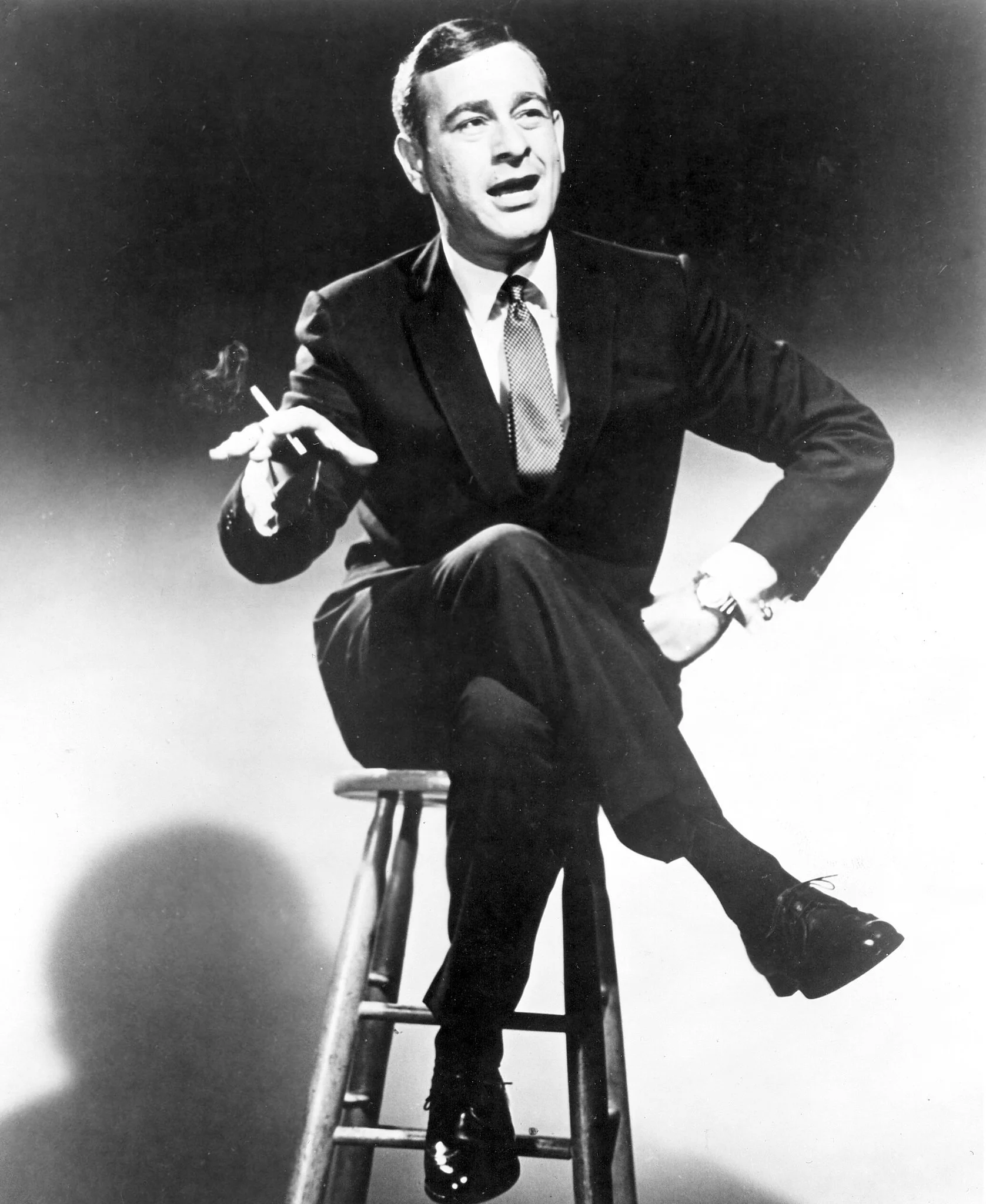
Who’s Shelley Berman?
Shelley Berman began studying acting shortly after he was honorably discharged from the US Navy. He enrolled as a drama student at Chicago's Goodman Theater, where he met Sarah Herman, another aspiring thespian. They fell in love and were married in 1947.
After graduating from the Goodman Theater, Shelley joined the Woodstock Players, a stock theater company in Woodstock, IL. It was here that he had the opportunity to really develop and polish his acting skills, with the support and encouragement of fellow players Geraldine Page, Betsy Palmer, and Tom Bosley.
Leaving Woodstock in 1949, Shelley and Sarah made their way across the country, with Shelley in search of acting work. When those jobs were scarce, he worked as a social director, a cab driver, a speech teacher, an assistant manager at a drug store, and an instructor at Arthur Murray Dance Studios.
While in New York, Shelley found work as a sketch writer for The Steve Allen Show (1956), and was doing well when he received an invitation to join an improvisational troupe known as The Compass Players, which took him back home to Chicago. With Compass (which later evolved into Second City), Shelley worked with soon-to-be famous performers Mike Nichols, Elaine May, Severn Darden, and Barbara Harris, among others.
While performing improvised sketches with the Compass Players, Shelley began developing solo pieces, employing an imaginary telephone to take the place of an onstage partner. While watching Mort Sahl perform at Mr. Kelly’s in Chicago in 1957, Shelley realized he didn’t necessarily have to tell traditional jokes, as other comedians of the day did, in order to work in nightclubs and went on to audition at the club, performing his one-man monologues and telephone routines with great success.
“Inside Shelley Berman”, released in early 1959, became the first comedy album to be awarded a gold record — for selling one million copies — and the first non-musical recording to win a Grammy Award. Shelley would eventually record a total of six albums for Verve, including “Outside Shelley Berman” and “The Edge of Shelley Berman”, both of which also went gold.
Shelley would go on to appear on numerous TV specials, and all of the major variety shows, including those of Ed Sullivan, Steve Allen, Jack Paar, Dinah Shore, Perry Como, Andy Williams, and Dean Martin.
Shelley’s great success as a comedian enabled him to continue with his first love, acting. He starred on Broadway in “A Family Affair” and would continue to do stage work in productions of “The Odd Couple”, “Damn Yankees”, “Where’s Charley?”, “Fiddler On the Roof”, “Two by Two”, “I’m Not Rappaport”, “La Cage aux Folles”, “Prisoner of Second Avenue”, and “Guys & Dolls”, among others.
Comedic and dramatic acting roles in what came to be known as “The Golden Age of Television” began to come his way, including memorable appearances on episodes of Peter Gunn, The Twilight Zone, Rawhide, Bewitched, The Man from U.N.C.L.E., The Mary Tyler Moore Show, Adam-12, Emergency!, CHiPs, St. Elsewhere, Night Court, MacGyver, L.A. Law, Friends, Arli$$, Lizzie McGuire, Providence, Walker Texas Ranger, The King of Queens, The Bernie Mac Show, Grey’s Anatomy, Entourage, Hannah Montana, CSI: NY, and Boston Legal, the latter of which he made numerous recurring guest-star appearances as the hilariously semi-senile Judge Robert Sanders.
Since 2002, Shelley has appeared as Nat David (Larry David’s father) on HBO’s Curb Your Enthusiasm, a role for which he received a 2008 Emmy Award nomination. With dialogue entirely improvised by its cast, “Curb” has given Shelley the opportunity to return to his improv roots, introduced him to a new generation of TV viewers, and brought him acclaim from critics and fans alike.
Among Shelley’s film credits are The Best Man (1964) with Henry Fonda; Divorce American Style (1967) with Dick Van Dyke and Debbie Reynolds; Every Home Should Have One (1970) with Marty Feldman; ’80s cult favorite Teen Witch (1989); The Last Producer (2000) with Burt Reynolds; Meet the Fockers (2004) with Robert De Niro and Ben Stiller; The Aristocrats (2005); The Holiday (2006) with Cameron Diaz; and You Don’t Mess with the Zohan (2008) with Adam Sandler.
Shelley continues to do film and television work and make personal appearances across the country year-round. He has authored three books, two plays, several TV pilot scripts, and numerous poems. For over 20 years he taught humor writing in the Master of Professional Writing program at USC, where he is now a Lecturer Emeritus. Shelley spends his (precious little) free time volunteering for various charitable organizations and indulging in his favorite hobby, knife collecting.
Sources
1. Geraldine Page — IMDb
2. Betsy Palmer — IMDb
3. Tom Bosley — IMDb
4. Arthur Murray — IMDb
5. The Steve Allen Show (1956) — IMDb
6. Mike Nichols — IMDb
7. Elaine May — IMDb
8. Severn Darden — IMDb
9. Barbara Harris — IMDb
10. Mort Sahl — IMDb
11. Ed Sullivan — IMDb
12. Steve Allen — IMDb
13. Jack Paar — IMDb
14. Dinah Shore — IMDb
15. Perry Como — IMDb
16. Andy Williams — IMDb
17. Dean Martin — IMDb
18. Peter Gunn (1958) — IMDb
19. The Twilight Zone (1959) — IMDb
20. Rawhide (1959) — IMDb
21. Bewitched (1964) — IMDb
22. The Man from U.N.C.L.E. (1964) — IMDb
23. The Mary Tyler Moore Show (1970) — IMDb
24. Adam-12 (1968) — IMDb
25. Emergency! (1972) — IMDb
26. CHiPs (1977) — IMDb
27. St. Elsewhere (1982) — IMDb
28. Night Court (1984) — IMDb
29. MacGyver (1985) — IMDb
30. L.A. Law (1986) — IMDb
31. Friends (1994) — IMDb
32. Arli$$ (1996) — IMDb
33. Lizzie McGuire (2001) — IMDb
34. Providence (1999) — IMDb
35. Walker, Texas Ranger (1993) — IMDb
36. The King of Queens (1998) — IMDb
37. Entourage (2004) — IMDb
38. Hannah Montana (2006) — IMDb
39. CSI: NY (2004) — IMDb
40. Boston Legal (2004) — IMDb
41. Larry David — IMDb
42. Curb Your Enthusiasm (2000) — IMDb
43. The Best Man (1964) — IMDb
44. Henry Fonda — IMDb
45. Divorce American Style (1967) — IMDb
46. Dick Van Dyke — IMDb
47. Debbie Reynolds — IMDb
48. Every Home Should Have One (1970) — IMDb
49. Marty Feldman — IMDb
50. Teen Witch (1989) — IMDb
51. The Last Producer (2000) — IMDb
52. Meet the Fockers (2004) — IMDb
53. Robert De Niro — IMDb
54. Ben Stiller — IMDb
55. The Aristocrats (2005) — IMDb
56. The Holiday (2006) — IMDb
57. Cameron Diaz — IMDb
58. You Don’t Mess with the Zohan (2008) — IMDb
59. Adam Sandler — IMDb
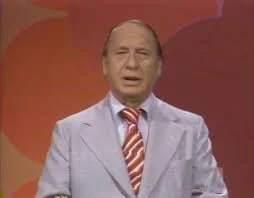
The Man. The myth. the legend.
Perhaps no comedian better understood the great truism among comedians that, regardless of the time devoted to working on an act and the energy put into a stage performance, a comic's material is the key to success or failure, than the "King of the One-Liners," Henny Youngman. For more than 70 years he entertained audiences as the quintessential Catskills comedian. His rapid-fire delivery, in which he could tell a half dozen wisecracks in 60 seconds, was filled with timeless bits that drew as many groans as laughs. Youngman's theory of comedy was to keep his jokes simple and compact. Beginning in the mid-1920s and extending into the 1990s, he repeated countless gags that could be immediately understood by everyone. Among his most famous lines are such comic gems as: "I just got back from a pleasure trip. I drove my mother-in-law to the airport," "The food at this restaurant is fit for a king. Here, King! Here, King!" and "A man goes to a psychiatrist. 'Nobody listens to me!' The doctor says, 'Next!"' In 1991, Youngman commented on his act's enduring popularity when he wrote, "Fads come and go in comedy. But the one-liner always remains sacred. People laughed at these jokes when I told them at Legs Diamond's Hotsy Totsy Club sixty years ago—and they're still laughing at these same one-liners at joints I play today."
Born on March 16, 1906, in England to Russian Jewish immigrants who later settled in New York (https://www.encyclopedia.com/places/united-states-and-canada/us-political-geography/new-york), Henry Youngman harbored dreams of entering show business from an early age. His first taste of success came as a bandleader for a quartet known as Henny Youngman and the Swanee Syncopaters. By the mid-1920s, the group became a regular presence in the "Borscht Belt"—an area in the Catskill Mountains (https://www.encyclopedia.com/places/united-states-and-canada/us-physical-geography/catskill-mountains) filled with private summer resorts that catered to a predominantly Jewish clientele. At the Swan Lake Inn, Youngman played with his musical group, while between sets he acted as the hotel's "tummler," a job that consisted of walking around the resort to make sure all the guests were having a good time. The tummler would often schmooze the male guests, dance with any unattached female guests, and even serve as an unofficial matchmaker. To keep the guests amused, a tummler had to have many jokes for practically any situation at his fingertips. Youngman recalled his days in the Catskills and their influence on his comedic style when he stated, "I'm quite sure my love of one-liners came from this mountain laboratory. You had to be able to rat-a-tat-tat them out, on all subjects, to all kinds of people, every hour, day or night."
Youngman abandoned the Swanee Syncopaters for the life of a standup comedian when a nightclub owner asked him to fill in for an act that failed to show. His comedy routine, honed from his days as a tummler, was a great hit. He soon came to the attention of a rising comedy headliner named Milton Berle (https://www.encyclopedia.com/people/literature-and-arts/film-and-television-biographies/milton-berle), who was impressed with Youngman's delivery and helped him get standup gigs at small clubs and bar mitzvahs. By the 1940s, the former tummler had become the featured comedian on radio's The Kate Smith Show. For two years he had a regular six-minute spot during which he told his one-liners and played the violin. It was in this period that Youngman acquired his signature joke: When his wife Sadie arrived at the show with several friends the nervous comedian wanted her to sit in the audience so he could prepare. He grabbed an usher and told him, "Take my wife, please." The comic incorporated the humorous ad-lib into his act and continued to use the line even after his wife died in 1987.
Youngman spent the greatest portion of his career touring throughout the world with his unvarying act. He was proud to say he had performed before both Queen Elizabeth II (https://www.encyclopedia.com/people/history/british-and-irish-history-biographies/elizabeth-ii) and the gangster Dutch Schultz. No matter the audience or setting, he would take to the stage with his prop violin and still-humorous lines. Jokes such as "My doctor told me I was dying. I asked for a second opinion. He said you're ugly, too." were repeated for years to audiences long familiar with Youngman's routine. He also frequently appeared on television talk and variety shows into his eighties. However, his attempts to become a regular TV performer were less successful. The summer of 1955 saw the failure of The Henny and Rocky Show, which paired him with ex-middleweight boxing champion Rocky Graziano. In 1990, he made a brief appearance as the emcee at the Copacabana in Martin Scorsese (https://www.encyclopedia.com/people/literature-and-arts/film-and-television-biographies/martin-scorsese)'s mobster epic Goodfellas. He died in New York (https://www.encyclopedia.com/places/united-states-and-canada/us-political-geography/new-york) on February 23, 1998.
Audiences laughed at Henny Youngman's nearly endless supply of one-liners because they were instantly funny and recognizable to almost everyone. He did not offer long comic monologues, controversial humor, or provocative social satire, but rather provided funny gags for anyone who has ever had to deal with life's more mundane occurrences, such as bad drivers, unhelpful doctors, drunken husbands, and mothers-in-law. Furthermore, his longevity allowed younger audiences to experience a still vital performer with roots in vaudeville. He proved that even the most well worn jokes, like "One fellow comes up to me and says he hasn't eaten in three days. I say, 'Force yourself!"' are still funny
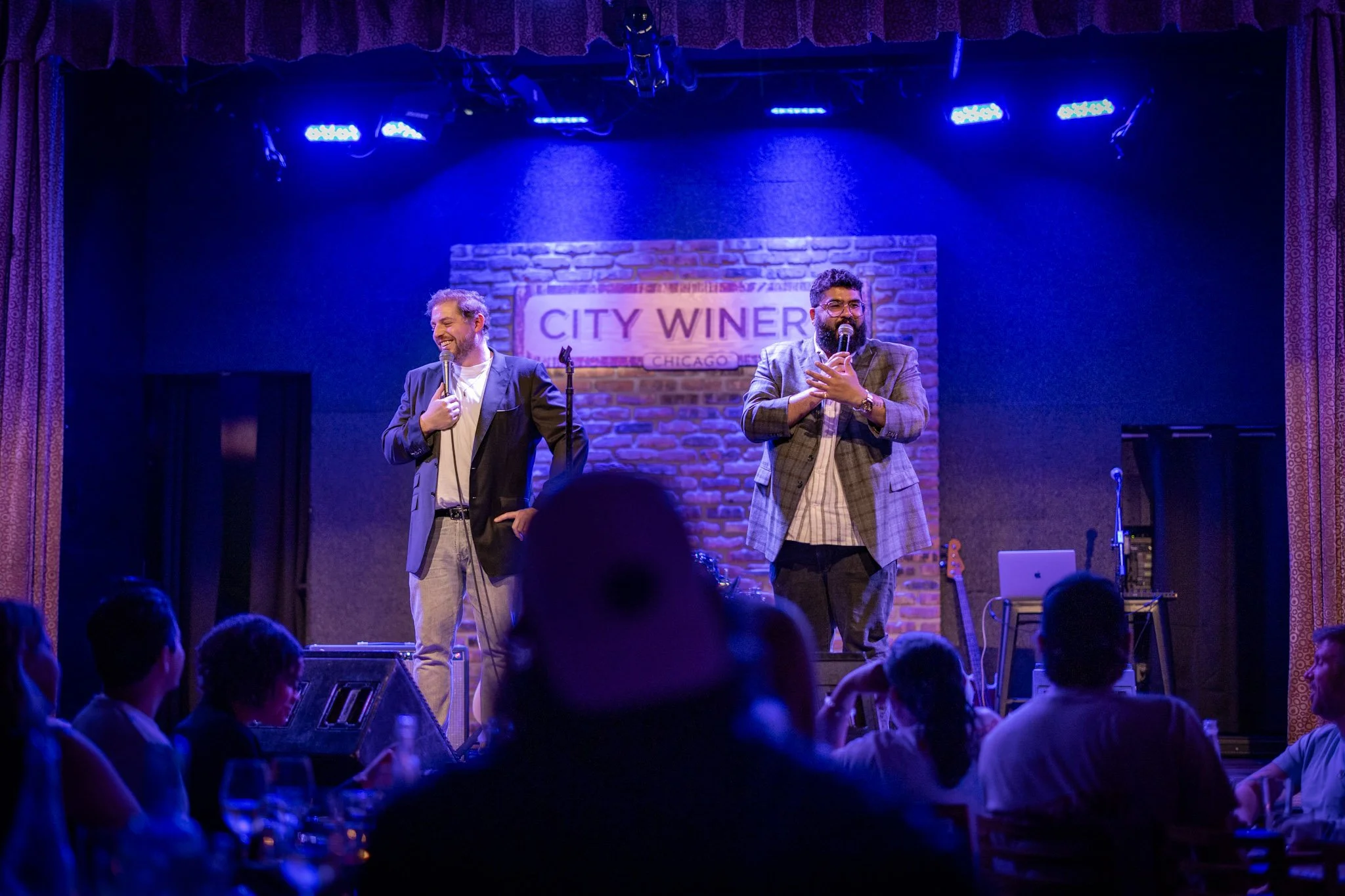
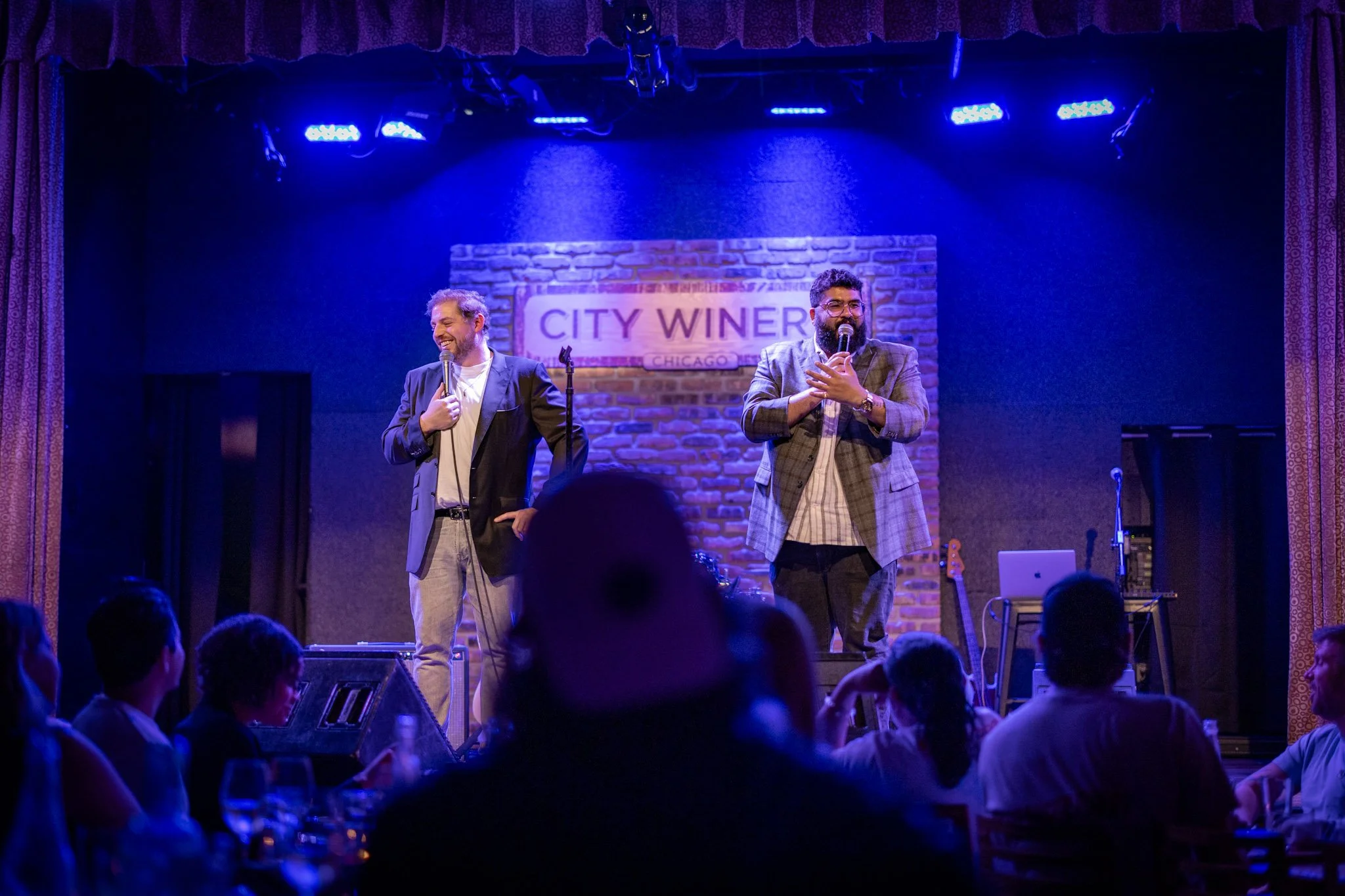
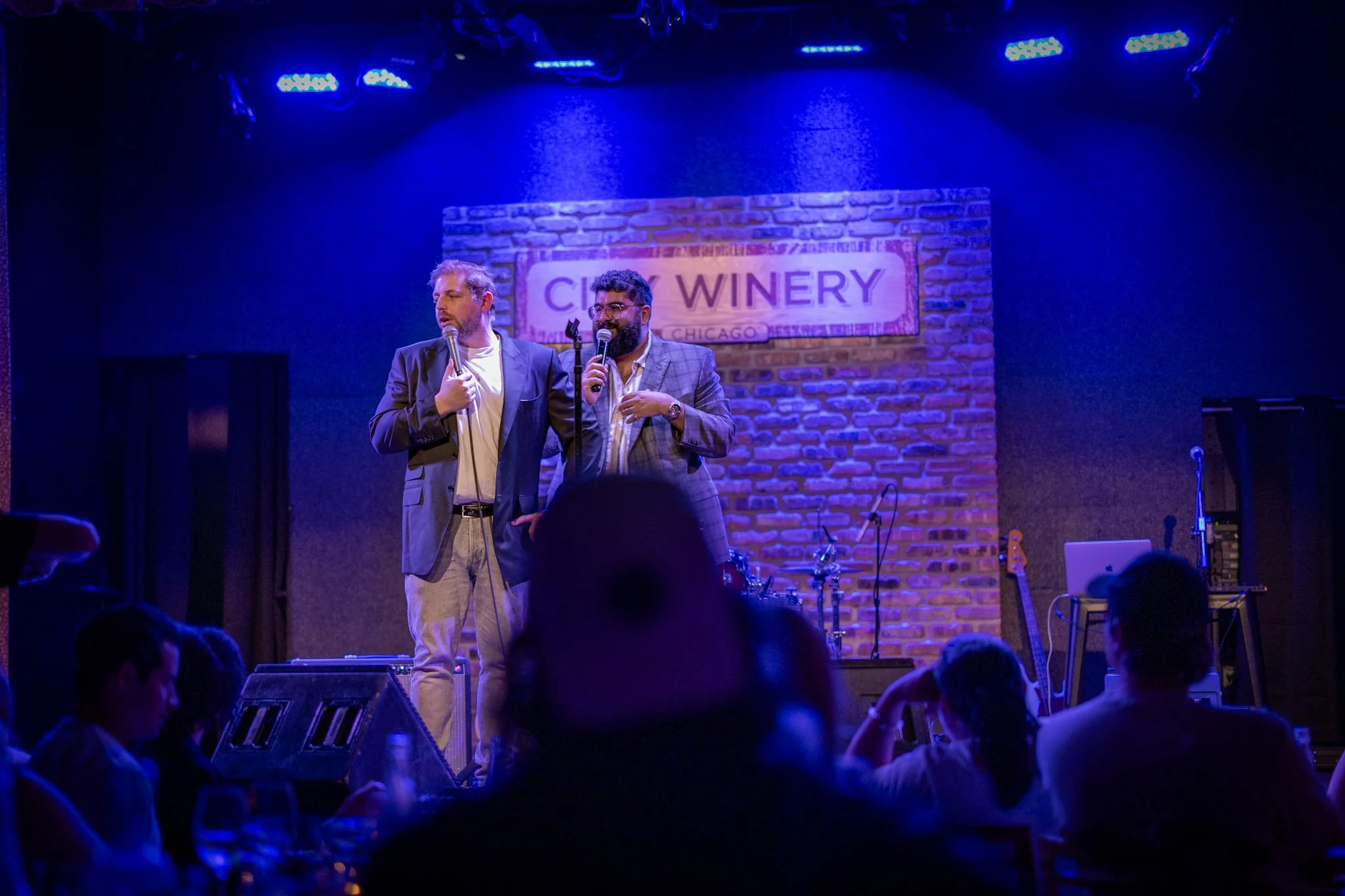
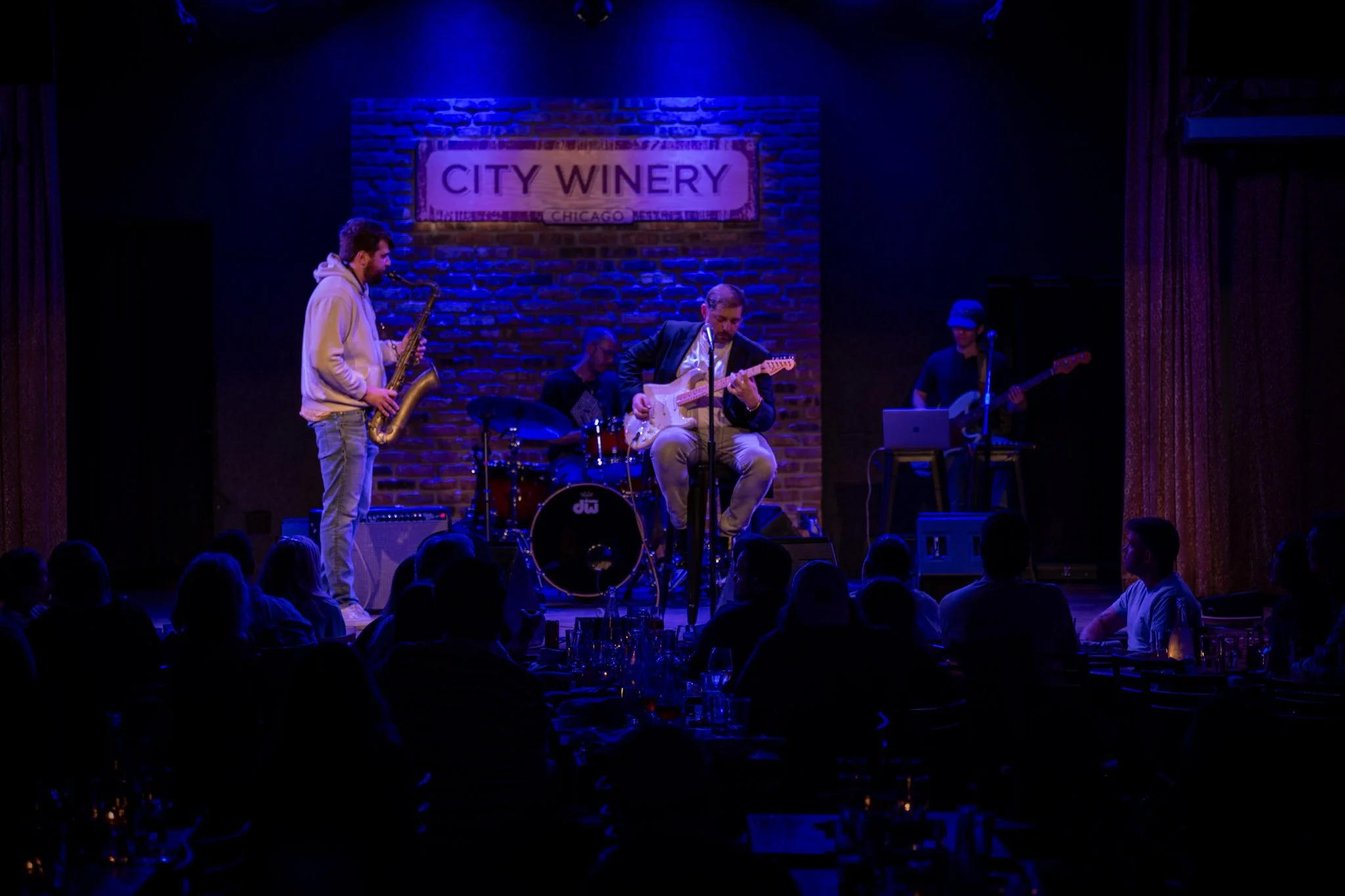
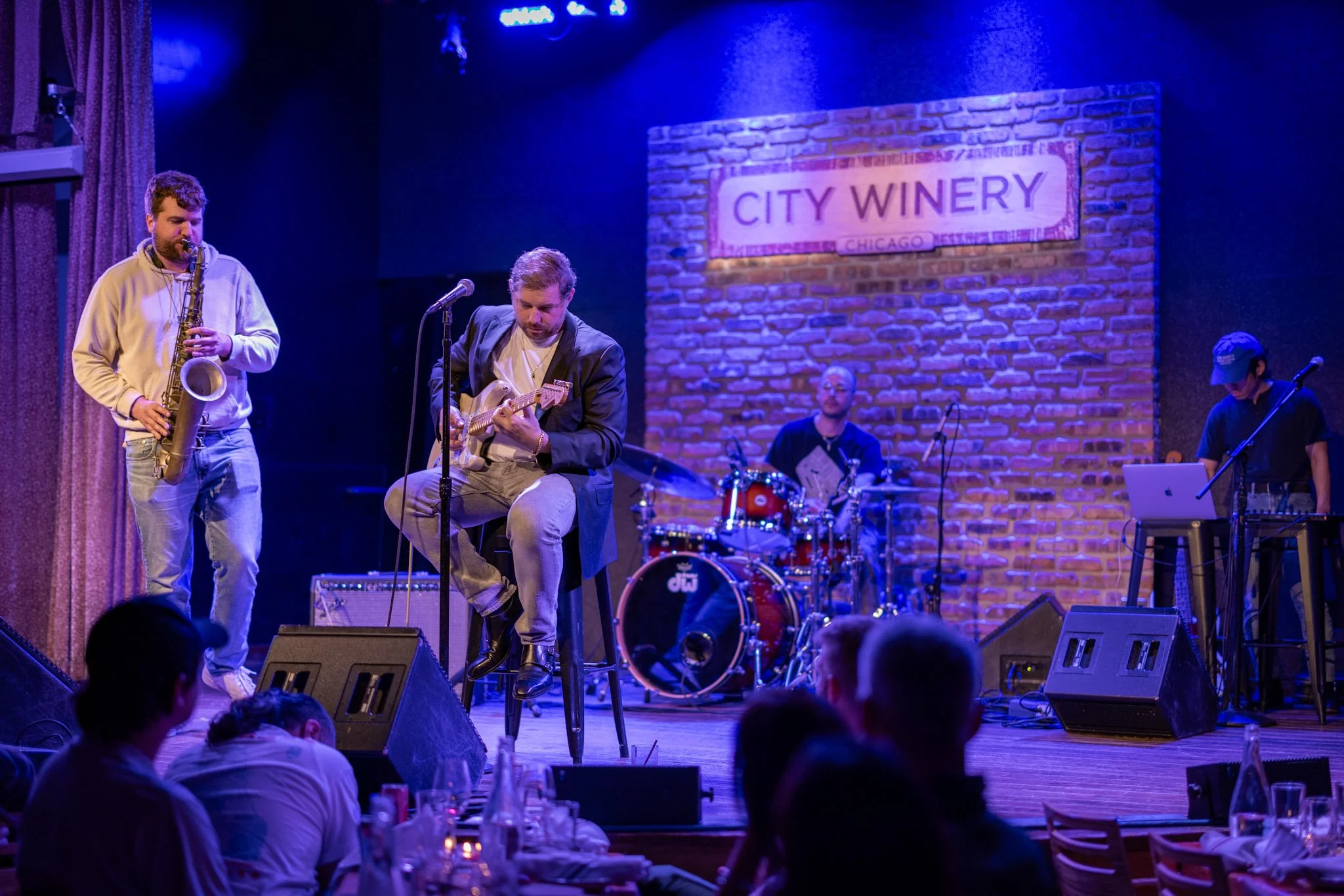
City Winery Recap - Short & Sweet
May 19th. I finally did the thing I’d been circling for years, the way you circle a plate you’re not sure you should order, knowing full well you’re going to order it anyway.
Some of you have been around long enough to know the truth: before comedy, there was music. Before I learned to make a room laugh, I was dead certain I’d be a rock star. Tequila on private jets. Groupies. The whole stupid, beautiful fantasy. That dream never quite paid out. The jet never landed. But the appetite never died, and appetite, I’ve learned, is the only thing worth trusting.
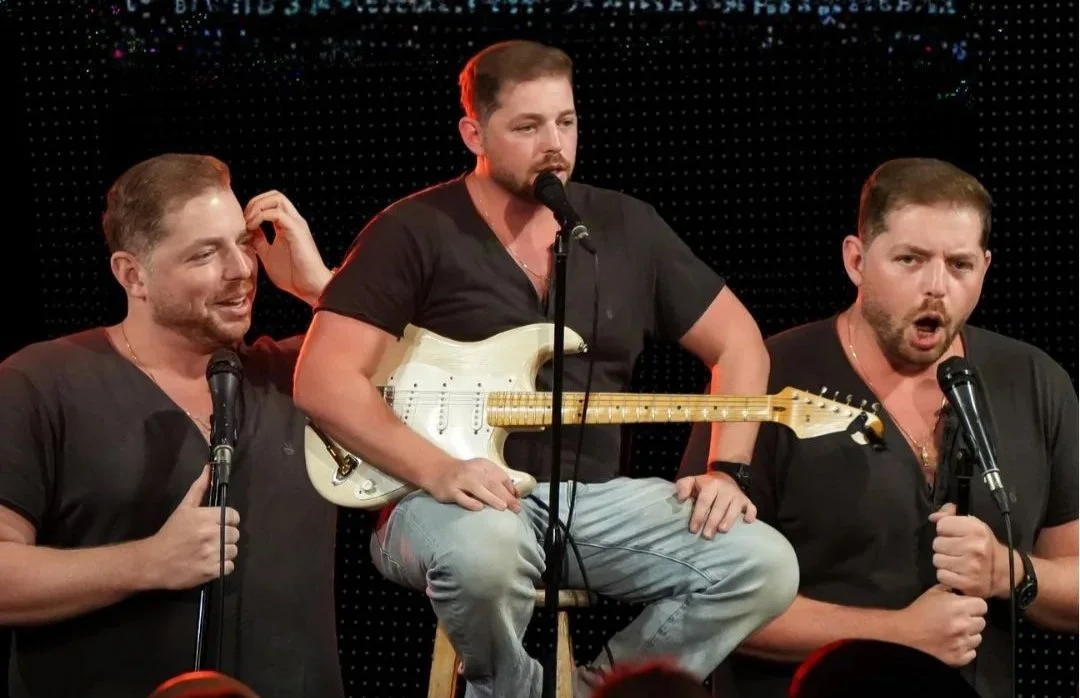
A few years back, I started dragging my guitar onstage. I’d wanted to for ages, but I kept the two worlds sealed off from each other, like a clean kitchen from a filthy one. I needed to know the stand-up could hold its own first. No prop, no crutch, no six strings to hide behind. Eight years in, I finally trusted it. So I picked up the guitar. Game-changer. One of the kindest things anyone’s ever said to me came after a set: “You were funny, and the guitar didn’t replace the jokes. It lived alongside them. I felt like I got two shows for the price of one.” That one stuck to the ribs.
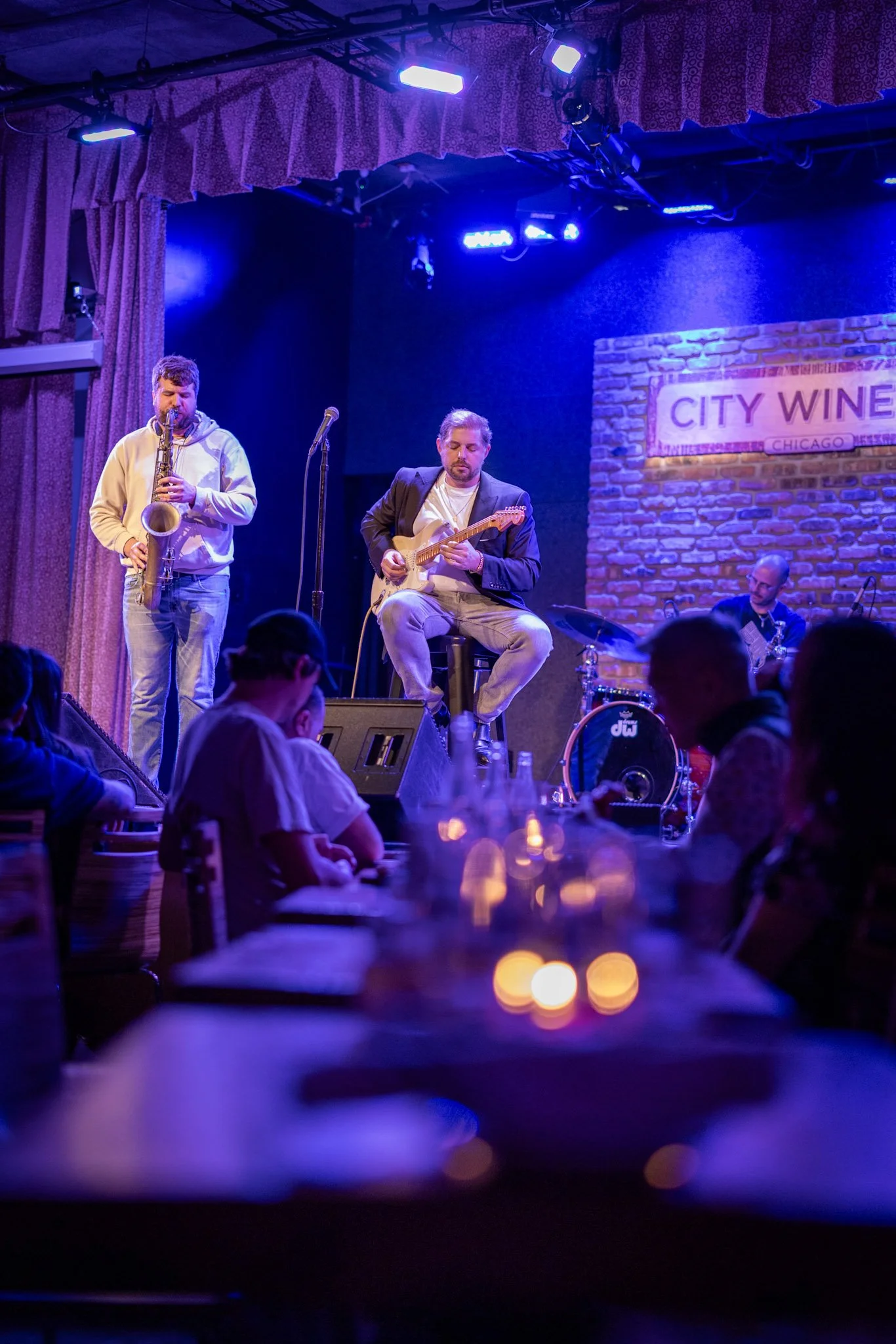
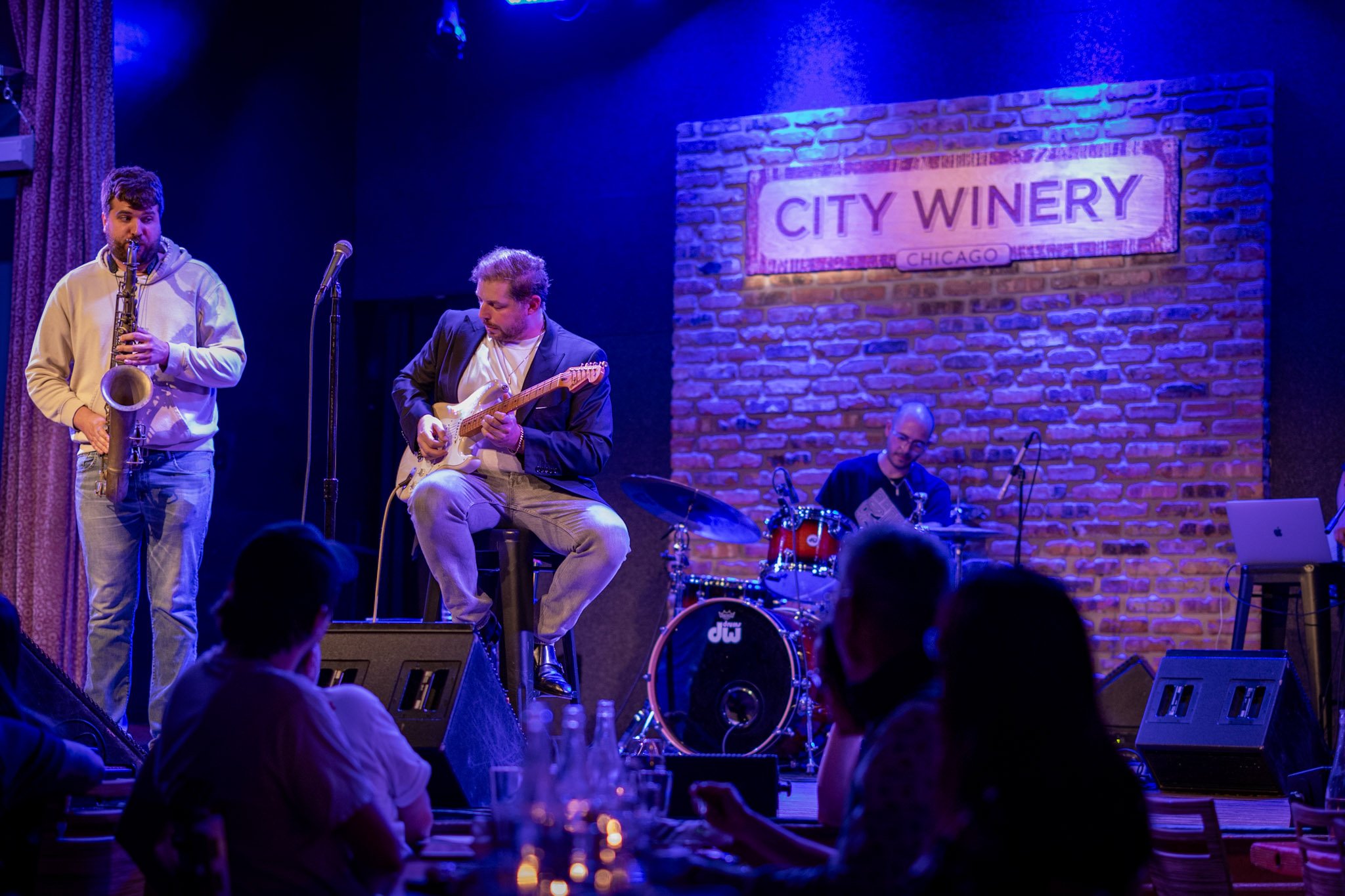
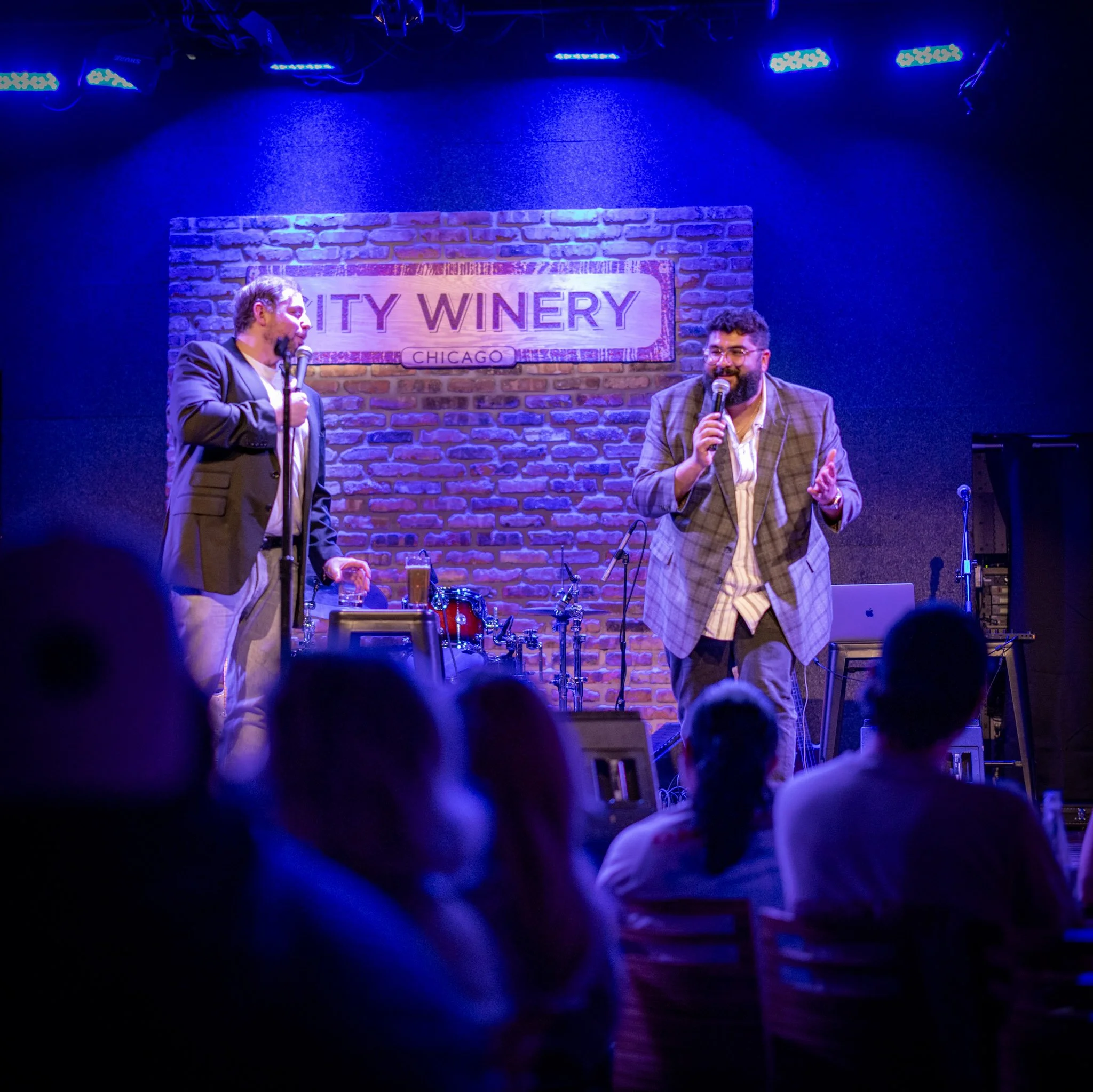
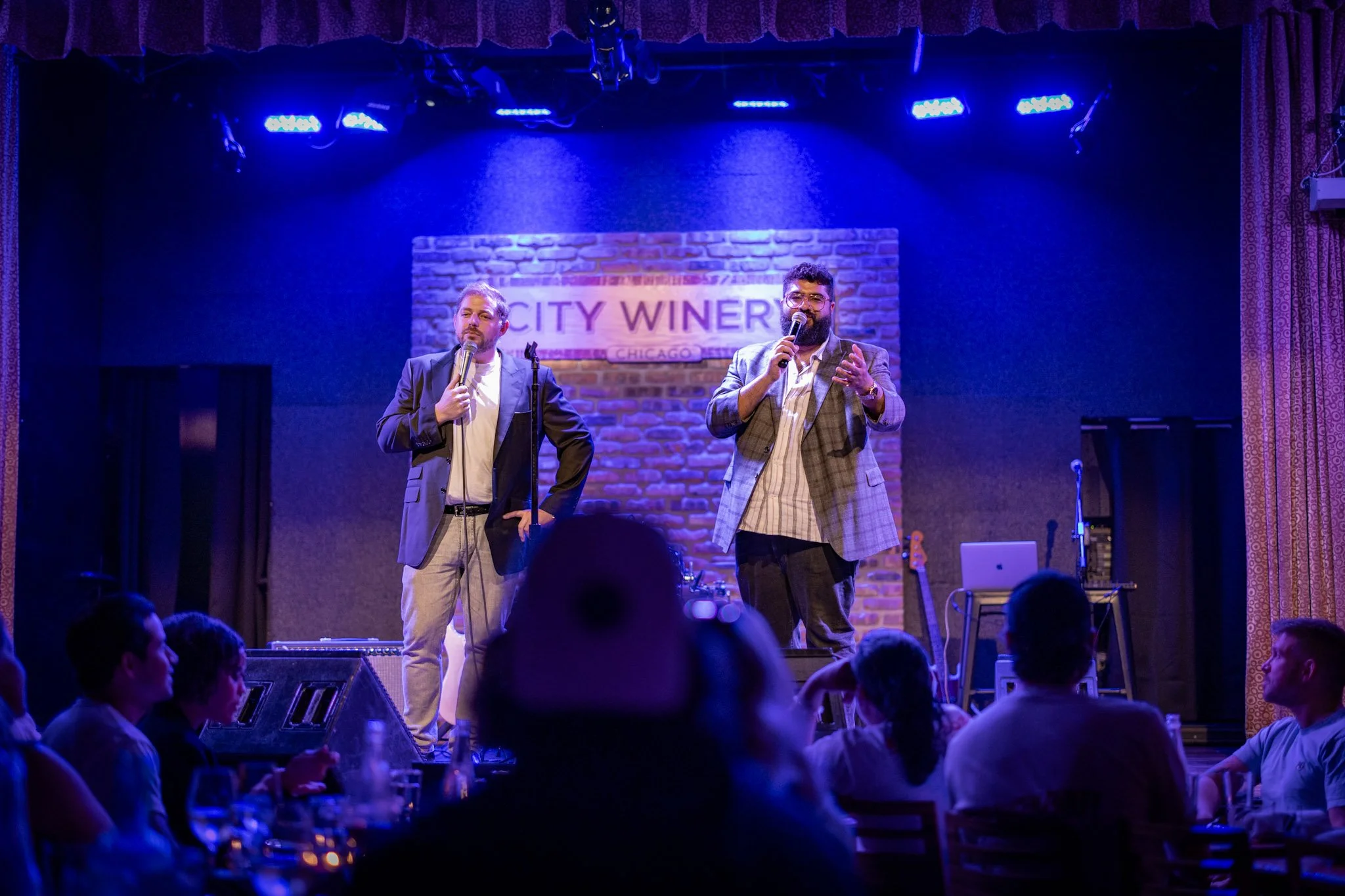
May 19th, I took it further. A full backing band behind me: drums, a singer, a saxophone wailing somewhere in the dark, bass holding the whole thing down like a good sauce. My entire set, scored. And here’s the part nobody believes: it felt like coming home. No train wrecks, no flop sweat. One quick soundcheck and we walked out and burned the place down. Watching something I’d carried around in my head for years finally take a breath in the real world, that’s the closest I’ve come to seeing the show I dream about when I should be sleeping.
It wasn’t a comedy show. It was an event. Something with a pulse. Comedy and music in the same room is a dangerous, gorgeous combination. Music drags the mood up by the collar. Comedy lightens the unbearable weight of being alive for a few minutes. You walk out feeling like you got away with something.
I can’t wait to do it again.


What Music Taught Me About Comedy
Timing is everything. In music, you learn this literally. You're playing with other people and you have to be perfectly in sync; being slightly behind or in front of the beat can make the whole thing fall apart. You probably knew this from watching Whiplash though. Comedy works the same way. A joke that lands is often just a joke with better timing than the one that doesn't. I spent years counting beats, and it turns out I was just training for the stage. One of the things about playing by yourself, or with yourself, is you also get to make your own rhythm.
You have to rehearse to be spontaneous. The best moments on stage—in both music and comedy—feel effortless. They aren't. They are the result of doing the same thing over and over until it becomes second nature. Even the notion of improv and spontaneity requires practice and training. It takes years of going up and saying I’m not going to tell one joke for a minute, or two minutes, or ten, and forcing yourself to rely on your instincts. Sometimes it works, sometimes it doesn’t, but overall it builds the skill.
Bombing is just a bad show. Every musician has played a set that died. The crowd wasn't there, the energy was off, and nothing connected. You pack up your gear, go home, and come back next week. Comedy is no different. A bad set isn't a referendum on your worth as a human being—it's just Tuesday, it can be a poorly timed check drop, a heckler who really gets to you that night. The skill is learning to work with the obstruction, moving through it or around it, but even still sometimes you have to try new raw material. And sometimes the stuff that won’t make it to your act just bombs, and it has to, several times so you know to abandon it.
The crowd tells you everything. In a band, you learn to feel a room—when they're with you, when you're losing them, or when you need to speed up, slow down, or just shut up and play the song they actually want to hear. That instinct is the most valuable thing I brought from music into comedy. You can't fake a room; you have to listen to it. It’s all energy, we feed off energy, we also provide the energy, so it’s about making the stage your own, cultivating your craft through your energy, and knowing how to dial it in.
These days, I'm a working stand-up comedian. I still love music, and I think about those years in bands more than I probably should. But every time I walk up to a mic, I'm carrying all of it with me: the late nights, the bad gigs, and those rare moments where something clicked and the room was suddenly, completely yours.
Turns out, I was always performing. I just had to find the right instrument. Plus, I still carry my guitar to all my gigs, so I get to play a little anyway.”

The Story
Part one : There's a version of my life where I'm still hauling a guitar into a van at midnight, arguing about setlists and splitting a $47 bar tab four ways. That version of me would be shocked to know I ended up doing stand-up comedy—and probably a little relieved, too.
The truth is, the stage was always the destination; I just took the scenic route to get there.
I started playing in bands when I was 15, mostly because I had aspirational dreams of being the next Slash or Jimmy Page. I thought it was cool, and I genuinely loved the music. We called ourselves Black Horse, which tells you everything you need to know about where our heads were at.
We played all over Chicagoland—bars, basements, and the occasional actual stage if we were lucky. The crowds ranged from "enthusiastic" to "three people and a bartender who was clearly annoyed." But here's the thing about playing to a room that doesn't care: you learn really fast how to make them care. Or, at least, how to survive when they don't. That was my first exposure to the mechanics of stand-up.
There's a specific kind of humility that comes from being in a band. You rehearse for weeks, you think you're ready, and then you get up there and something goes wrong. A string breaks, someone misses a cue, or the sound guy hates you for reasons you'll never fully understand. You have to just keep going. That skill? Turns out it's incredibly useful in both comedy and life.
After years of bouncing around bands, I found myself in a traditional Brazilian Bossa Nova group, traveling the country in a van with dancers, percussionists, and trumpet players.
I started noticing during the constant repetition that the parts of our shows I looked forward to most weren't the songs. It was the in-between stuff—the banter and the accidental moments. One time I said something off the cuff and the whole room laughed, and I thought, "Oh. That's the thing." After getting burned one too many times by unnecessarily big egos and band nonsense, I quit and decided to take a break. It would be two years before I truly discerned what comedy could be for me.
Comedy and music aren't as different as people think. Both are about timing. Both are about reading a room. Both require you to stand in front of strangers and ask them to feel something. The main difference is that in comedy, if a joke doesn't land, there's no guitar riff to hide behind.

What Moving to Nepal at 20 Actually Taught Me
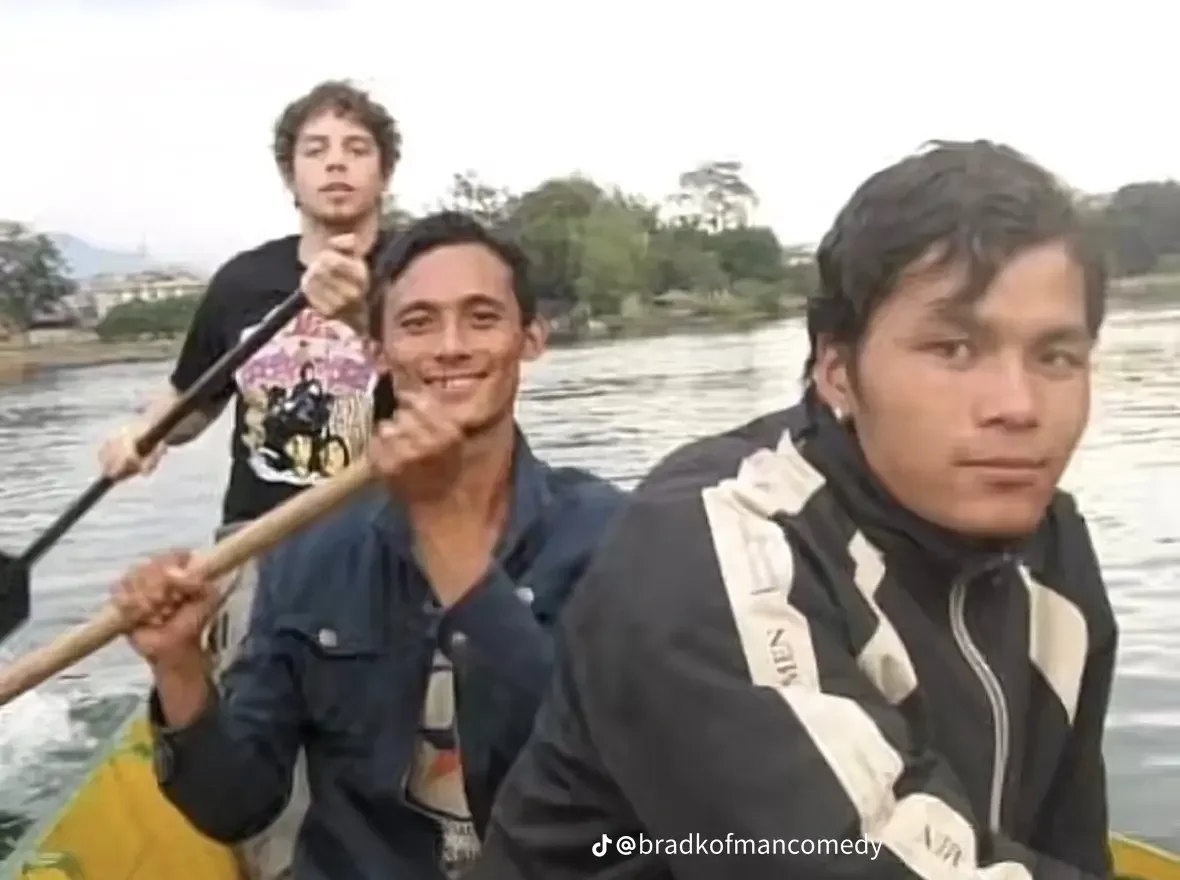

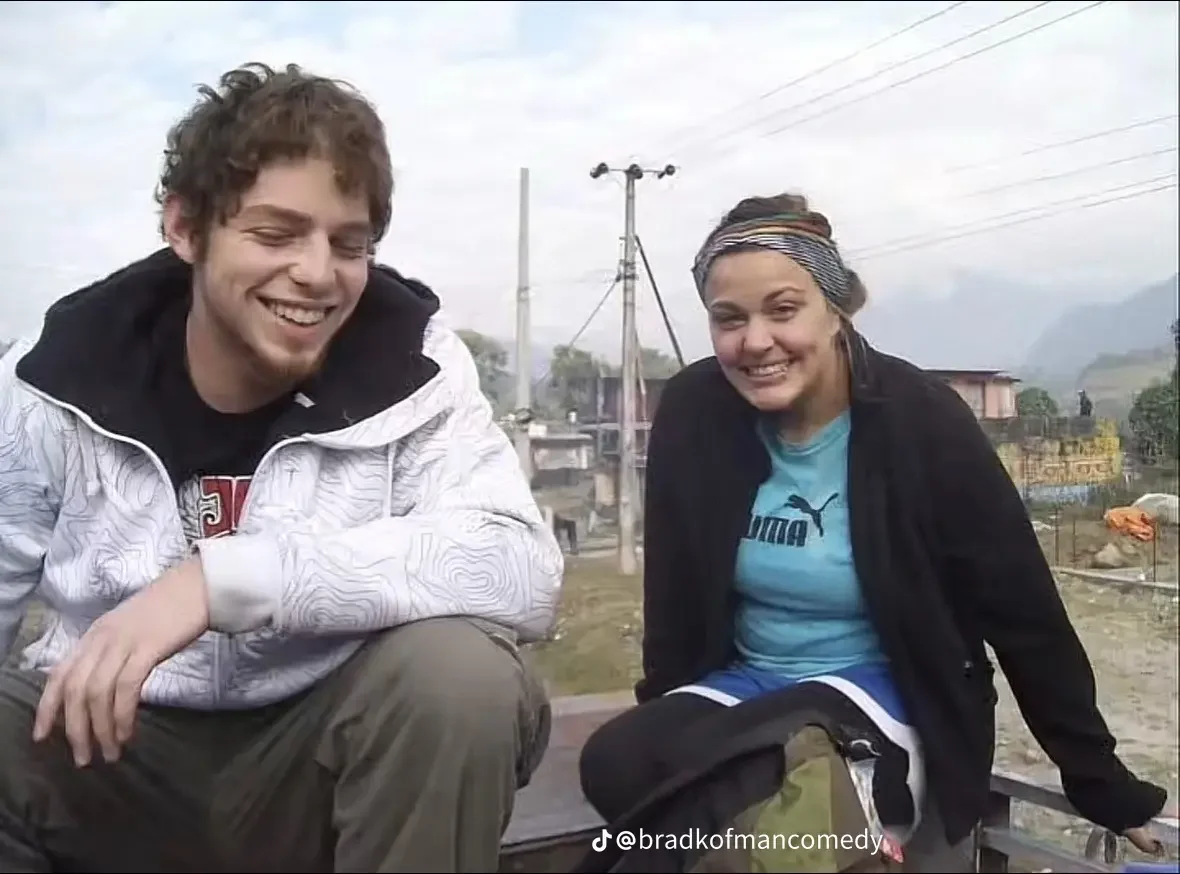


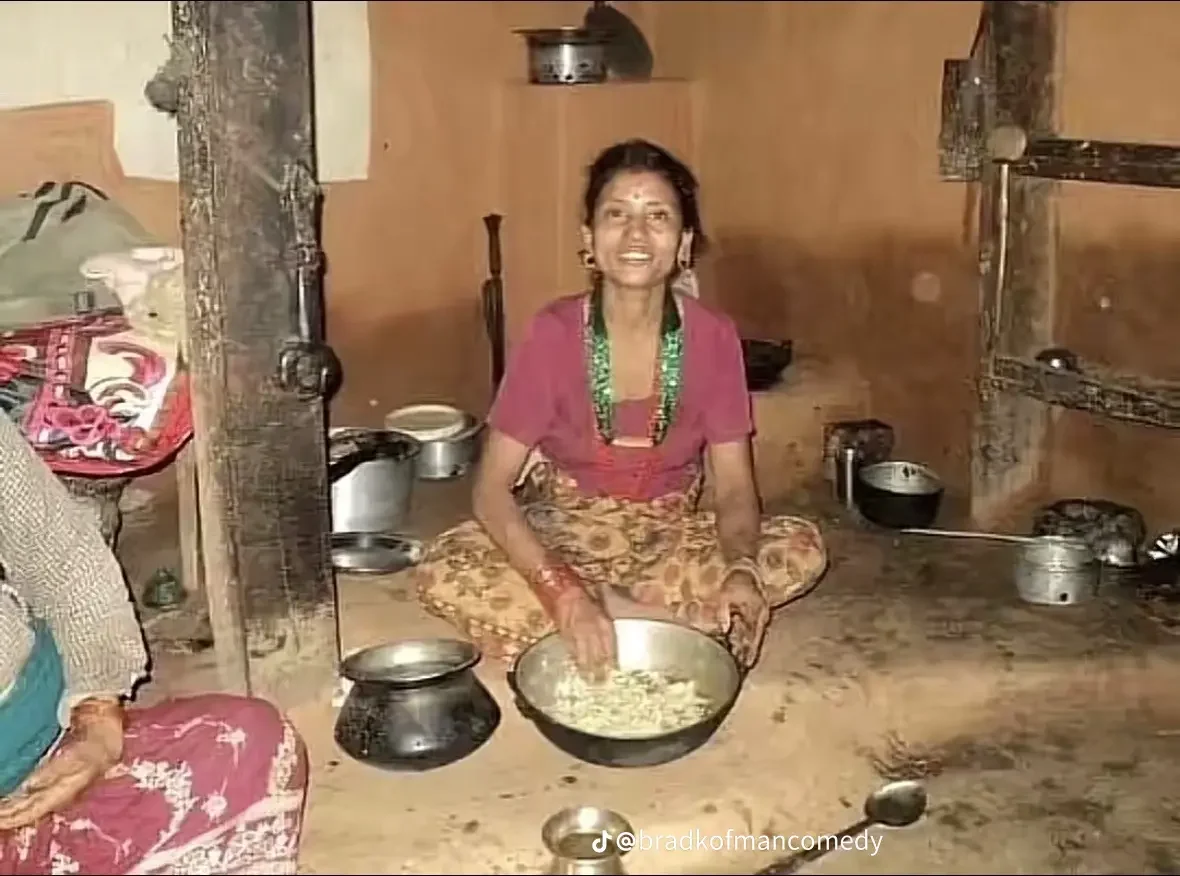
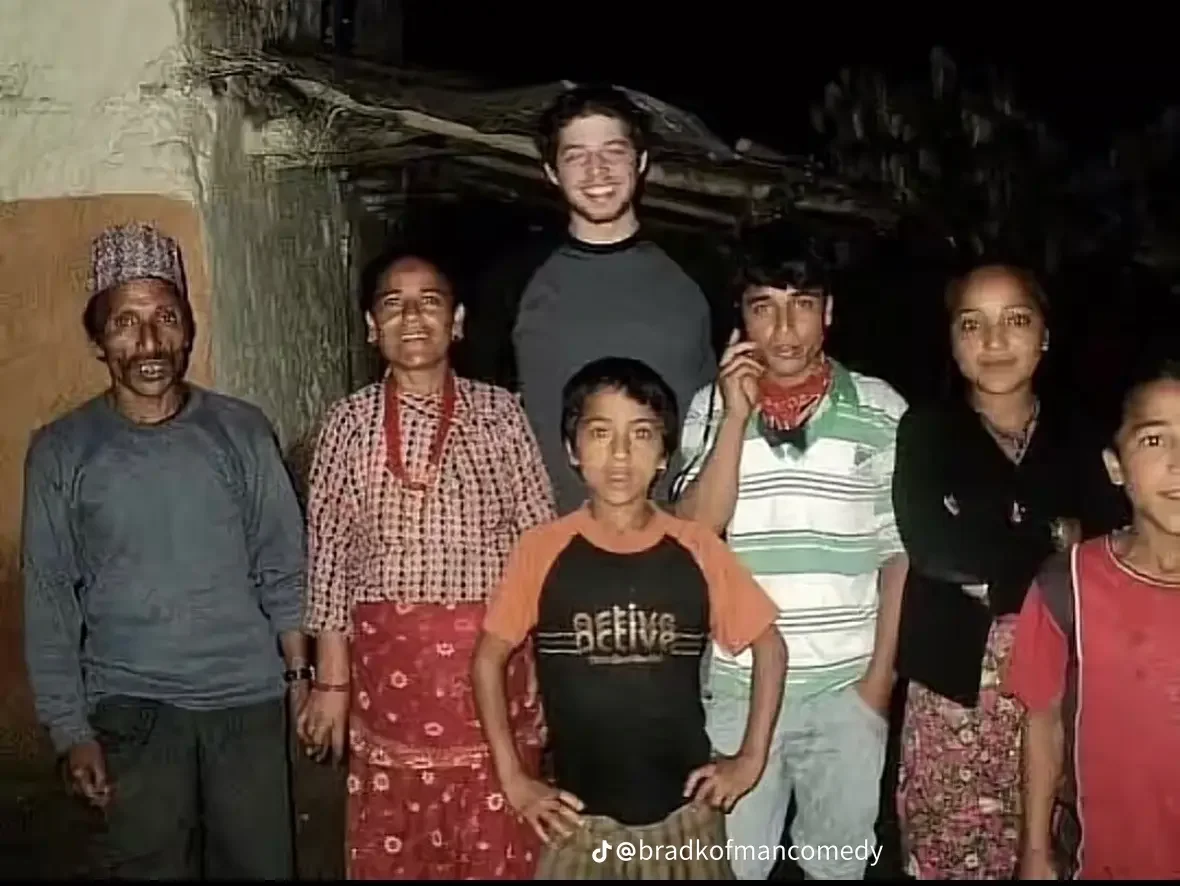
I was 20 years old when I moved to Nepal. I had no plan, no itinerary, and barely any money. Armed only with a bag, a one-way ticket, and the kind of confidence that only exists for a 20-year-old with a minimally developed frontal lobe, I thought I could handle anything.
People always ask why, and honestly?
I was fascinated with developing nations. I had seen poverty in the U.S. and experienced so much happiness amidst it. My thought was that people in a third-world country must possess immense wisdom and an amazing outlook. I also simply wanted to see the extent of global hardship. I found answers to all my curiosities; as it turns out, I was right. I encountered immense wisdom, beautiful spirits, and heart-crushing poverty that should honestly have been called slavery.
Here’s what I actually came back with:
I developed a completely different relationship with patience. Nepal runs on its own clock; things happen when they happen. You either make peace with that or spend every day furious—and being furious is exhausting. The lack of schedules gave me an entirely different perspective on time, making life move both quickly and joyously. In happy moments, hours would pass like minutes, and the days began to blend together. Life became an adventure, with a 24-hour clock that reset every morning.
I gained a deep respect for personal struggles. You never know what someone deals with behind closed doors. The most joyous people I saw every day would often invite me back to their homes for tea, where I would witness heart-crushing circumstances.
One thing I’ll never forget came from the Sherpas. I’d ask if they ever found their jobs difficult—men ranging from 14 to 70 years old strapping over 200 kilos to a band around their foreheads, trekking alongside tourists who bragged about climbing Everest with oxygen tanks while the locals crushed the trail in flip-flops while smoking cigarettes. They’d say, "We don’t have a word for difficulty; it’s just our day."
I formed an extremely strong opinion about dal bhat. It’s a rice and lentil dish I ate twice a day, every single day, and I fully understand the hype. I still think about it. I enjoyed it best with chicken, goat, or gundruk (the Nepali national vegetable).
Then there was the guitar. Having plenty of time and zero distractions allowed me to truly sit with music instead of just playing it. Something shifted; I stopped just playing chords and started letting music flow through my emotions, focusing more on "vibes."
Finally, I learned enough Nepali to get a job, negotiate an apartment, and even delve into the Southeast Asian gambling scene (where I unfortunately lost a big toe in Kathmandu). When I returned home during the housing market crash, I couldn’t find work anywhere—I even spent six weeks as a day laborer at Home Depot until that dried up, too. However, I was able to walk into a local Nepali restaurant, tell the owner I’d lived in his country, and land a job making two dollars an hour plus free buffet leftovers. It was exactly what I needed. Ujwhal Adhikari delivered—thanks, man! It was the best job I ever had. Zero notes.
Would I recommend moving abroad at 20 with no plan? It depends on the person. If you learn by doing, sometimes the most useful move is throwing yourself somewhere completely unfamiliar to see what sticks.
Spring makes me want to go somewhere. Maybe not a one-way ticket this time though.
– Brad

A Definitive Ranking of Every Job I've Had Before This One
It All Begins Here
People always ask what comedians did before comedy. In my case, the answer is many things, none of them particularly well. Here is an honest ranking of every job I held that wasn't a "comedian, actor, filmmaker, or musician," from the ones I'd rather forget to the ones that I may have actually enjoyed.
7. Chipotle - My stint at Chipotle was brief. I was very poor and got fired for eating too many burritos and giving extras or waste burritos to my friends. Honestly, I considered myself more of a Robin Hood of Chipotle; loss prevention disagreed, hence my short stint.
6. Holiday Inn - I was a van driver at the Holiday Inn for years while living in Minneapolis and playing in bands. I loved it; I first learned here that I had the "gift of gab." I'd recommend restaurants and bars, tell jokes, and drive people around to make tips. I used to get tips for cracking people up—one of my very first comedy gigs.
5. Front Desk at Jewish Community Center - This was my high school job; I would sit at the front desk after school and on weekends. I'd answer the phone, help people find things, and deal with angry naked Russians when the steam room was broken.
4. Maharaja’s Head Shop - This was very brief. The owner was insane, and I lasted only three hours. He started fining employees for speaking to each other, so after an hour, he tried to tell me I owed him money. I left immediately.
3. Filmmaker - I still do this to this day. I love films, and I love creating things. I’ve created 11 short films—most of them mockumentaries, deriving a ton of inspiration from Fred Armisen and Bill Hader’s Documentary Now. I’ve been involved in over 47 film festivals, placed in 27, and have even attended prestigious festivals like Austin, LA International, and Cannes.
2. Day Laborer - When I was 19 and very broke during the recession, I could not get a job. A friend told me I could hang out in front of Home Depot and people would pay me daily for work. I did not fully know what he meant, but I went anyway. Apparently, me speaking English was huge; I was thrown into a pickup truck with a group of Hispanic laborers and told to translate job site initiatives to my colleagues. Spoiler alert: I don’t speak any Spanish. I was able to fake it for about six weeks since my colleagues were absolute pros and just got to work after my broken Spanish translations. I was eventually found out by a guy who spoke fluent Spanish, but hey, we hustled our way to buy food for a few weeks and made some good friends. I still talk to Miguel to this day.
1. Nepali Restaurant - At 20, I moved to Nepal. Upon my return, I could not get a job anywhere. Finally, as a last-ditch effort, I went into a Nepali restaurant and said, "I just got back from your country, I speak the language, I love the food, and I desperately need a job." My mentor for many years, Ujwal Adhikari, told me to show up Tuesday. I made $2 an hour but kept my tips and got to take home the buffet leftovers every day; to this day, it was the greatest job I ever had. Ujwal taught me so much about food, cooking, life, and spirituality. The lessons I learned there were invaluable; he would often tell me, "You come to me a rock; I’ll make you a diamond." I haven’t kept in touch like I should, but he truly was a great man.